
Source TOI
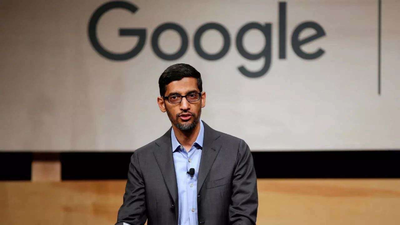
In a sharp divergence of views within the tech world, Sundar Pichai — CEO of Google and its parent Alphabet — has once again sounded a note of caution about a possible “AI bubble.” Meanwhile, Eddie Wu, CEO of the Chinese giant Alibaba — often described as China’s largest AI-heavy company — is dismissing those fears entirely.
Pichai’s warning: “No company is immune”
In a recent interview with the BBC, Pichai acknowledged that the AI boom currently underway is an “extraordinary moment,” but stressed it carries “elements of irrationality” — similar to what preceded the burst of the dot-com bubble in the early 2000s.
He cautioned that if the so-called AI bubble bursts, even mega-players won’t come out unscathed. “I think no company is going to be immune, including us,” he said.
Pichai also emphasized that AI tools remain “prone to some errors,” urging users not to “blindly trust” everything these systems produce. According to him, while AI can help with creative tasks or productivity boosts, it’s not yet infallible.
Further concerns he raised include AI’s large energy consumption — last year, AI operations accounted for about 1.5% of global electricity usage — which could complicate sustainability and climate-target commitments for companies.
Alibaba’s bullish counter: “We’re not even able to keep pace”
On the other side, Eddie Wu of Alibaba has rejected the “AI bubble” framing altogether. He argued that current demand for AI — whether in manufacturing, product development or cloud computing — is real and growing faster than companies can supply. “We’re not even able to keep pace with the growth in customer demand,” Wu said.
For Alibaba, this isn’t speculative hype. The firm claims its AI-powered offerings are already seeing strong real-world adoption. Wu insisted Alibaba will continue to “invest aggressively” in AI infrastructure despite rising costs and profit pressures.
In fact, Alibaba’s AI-related cloud and software services reportedly contributed to a 34% increase in cloud-division revenue — even as net profit fell, because of heavy investments in AI and marketing.
What this split reveals — and what it means for AI’s future
The disagreement between Pichai and Wu highlights a broader tension across the global tech industry. On one hand, there is excitement — and serious financial commitment — behind AI’s potential to transform business, productivity, manufacturing, services, and more. On the other hand, there is increasing concern over whether current valuations and investment levels are sustainable, or whether the sector is overheating.
Pichai’s warning suggests even companies with deep pockets and broad technological stacks — like Google — may suffer if demand falters or market optimism wanes. Meanwhile, Alibaba’s stance suggests some industry leaders believe the AI wave still has momentum and real demand behind it, not just hype.
If Pichai’s caution proves prescient, a burst could reverberate not just across startups but also across tech giants, cloud providers, and companies dependent on AI infrastructure. On the other hand, if real-world demand continues to grow, AI could evolve into a foundational technology — like the internet — albeit perhaps with a rocky growth curve.
Broader context: Why AI-bubble talk is heating up
The global scale of AI investment has surged — with an estimated $1.4 trillion worth of deals, even as revenue returns for many new AI ventures remain modest.
Many analysts draw parallels between the current AI boom and the dot-com era of the late 1990s — a time marked by exuberant investment, inflated valuations, and eventual market collapse before the underlying technology became truly transformative. Pichai himself invoked that comparison.
There are also increasing concerns about sustainability: data centers and AI compute require enormous energy, which raises environmental and infrastructural challenges — something that even big firms like Google must wrestle with.
What to watch next
Whether AI-heavy companies continue aggressive investments — or whether we see a slowdown or consolidation in the near future.
Real-world adoption numbers vs. speculative valuations: if demand remains strong, AI could sustain growth; but if adoption plateaus, valuations may suffer.
Energy/climate costs associated with AI infrastructure — and how companies reconcile rapid growth with sustainability goals.
How regulators, investors, and markets respond if AI-sector growth shows cracks.









