
Source News 18
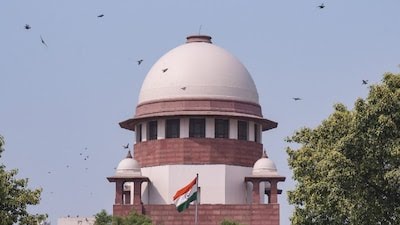
NEW DELHI – The Supreme Court of India on Wednesday delivered a significant observation in the ongoing legal battle over the Election Commission of India’s (ECI) nationwide Special Intensive Revision (SIR) of electoral rolls, emphatically stating that the ECI is “statutorily and constitutionally empowered” to conduct such an exercise.
The observation came amid fiery arguments from opposition parties, particularly the Congress and its allies, who have alleged that the SIR process, which involves large-scale deletions, is a politically motivated move by the ruling Bharatiya Janata Party (BJP) to exclude genuine voters.
The Bihar Precedent
The apex court’s bench, led by Chief Justice of India Surya Kant, specifically highlighted the recently completed SIR exercise in Bihar as evidence that the process, once fine-tuned under judicial oversight, resulted in legitimate deletions without impacting genuine voters.
“The SIR of Bihar’s electoral rolls was a prime example,” observed CJI Kant. “Initially, the court was told that crores of voters are being deleted. We issued certain directions to streamline the process. Eventually, what happened? Among the deletions from the voter list were those found to have died or migrated outside. No one filed an objection. We did not find any impact on the ground level.”
Justice Joymalya Bagchi further questioned the petitioners’ arguments against the revision, noting that a clean-up is necessary: “It is a matter of record that in 2012 and 2014, the number of voters exceeded the total adult population. Is it not necessary to correct the electoral roll?”
Opposition’s “Exclusionary” Concerns Rejected
Senior counsel Kapil Sibal, representing a petitioner, argued that the SIR departed from the statutory scheme and was fundamentally “exclusionary,” placing an undue burden on illiterate or marginalized voters to prove their citizenship.
However, the bench rejected the plea to stall the pan-India SIR, reaffirming the ECI’s power to correct inaccuracies, including removing deceased voters, duplicate entries, and individuals who have migrated. The Court also assured that it would order corrective measures if any flaws could be demonstrated by the petitioners.
Political Fallout
The Supreme Court’s observations provide a major boost to the BJP and the ECI, which have consistently defended the SIR as a necessary exercise to clean up corrupted electoral rolls.
BJP Stance: The ruling party views the SIR as an essential safeguard for the integrity of the democratic process, arguing that the removal of deceased or migrated voters ensures ‘one-person, one-vote’ and prevents electoral malpractice.
Congress & Allies’ Response: The opposition has framed the SIR as “silent, invisible rigging,” alleging it disproportionately targets communities perceived as anti-BJP. Jharkhand Congress Minister Irfan Ansari recently sparked controversy by purportedly asking people to “lock up” Booth-level Officers (BLOs) involved in the revision, which he later claimed was misinterpreted.
The Supreme Court has now asked the ECI to file its formal response to the petitions challenging the SIR’s legality. Hearings on separate challenges to the ongoing revision in states like Tamil Nadu and West Bengal have been scheduled for early December.









