
Source ABP live
CAMBRIDGE, MA — The interstellar visitor 3I/ATLAS continues to defy easy categorization, fueling a high-stakes debate between mainstream astronomy and the controversial proposals of Harvard astrophysicist Dr. Avi Loeb. While NASA and most of the scientific community maintain that the object is a rare but natural comet—the third confirmed interstellar object to pass through our Solar System—Dr. Loeb insists that its numerous anomalies demand an open-minded consideration of a technological origin.
The Anomalies of 3I/ATLAS
Loeb, known for his work on the first interstellar object ‘Oumuamua, has compiled a list of up to 13 anomalies exhibited by 3I/ATLAS, which he argues are highly improbable for a conventional comet. The most recent observations that have intensified the debate include:
Non-Gravitational Acceleration: The object has shown a small, unexplained acceleration near its closest approach to the Sun (perihelion), a behavior Loeb has publicly suggested could be “the technological signature of an internal engine.” Conventional models attribute this to the outgassing of ice, but Loeb questions the magnitude and nature of this effect.
The Jupiter Encounter Anomaly: Early calculations suggested that 3I/ATLAS’s trajectory was nudged to approach Jupiter on March 16, 2026, reaching a minimum distance almost exactly matching Jupiter’s Hill radius—the boundary where the planet’s gravity dominates. Loeb calculates the odds of this fine-tuning being random chance as less than 0.00004, leading him to speculate that an artificial object might be deliberately passing through to “seed” the planet’s system with technological devices.
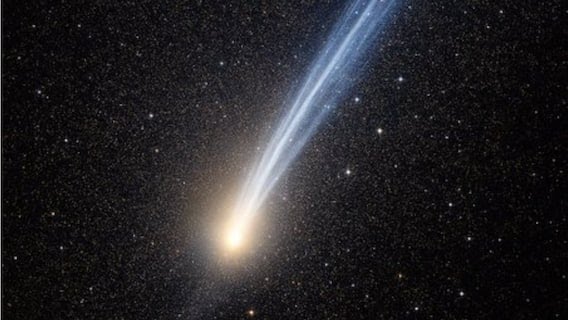
Unusual Jets and Geometry: Recent long-exposure images by amateur astronomers have reportedly captured two striking, ruler-straight lines extending for nearly a million kilometers from the object. Crucially, these lines run perpendicular to the Sun-object axis, unlike the anti-tail of a normal comet, which points toward the Sun. Loeb suggests these could be small fragments or probes released by a “mothership.”
The Sticking Point: Comet vs. Technology
NASA and the broader astronomy community have countered Loeb’s hypotheses, emphasizing that 3I/ATLAS displays characteristics consistent with a comet, such as the emission of gas and dust that forms a visible coma. They point to the fact that its high velocity confirms its interstellar origin, making it a valuable sample of material from outside our solar system, perhaps even older than our Sun. They believe that even the unusual features have plausible, albeit rare, natural explanations like a unique composition of highly volatile ices or viewing geometry.
However, Loeb argues that ruling out the technological possibility, or even ignoring the most extreme anomalies, violates the fundamental principles of the scientific method. He has challenged researchers to remain humble and let the data—expected to become clearer as 3I/ATLAS makes its closest approach to Earth on December 19, 2025—speak for itself.
Regardless of its true nature, 3I/ATLAS has become a crucial subject for planetary defense. The object is currently the official target of the eighth observing exercise by the International Asteroid Warning Network (IAWN), a campaign designed to test global readiness against potential cosmic threats.









