
Source The Hindu
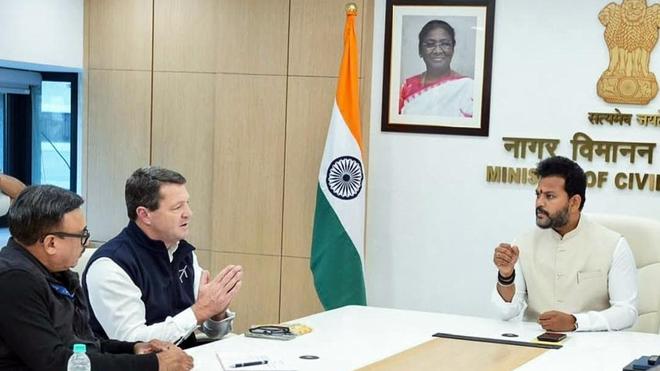
NEW DELHI—The Prime Minister’s Office (PMO) has stepped in to review the widespread operational disruptions faced by IndiGo, summoning officials from the Ministry of Civil Aviation (MoCA), the Directorate General of Civil Aviation (DGCA), and the Airports Authority of India (AAI) for a high-level meeting. The review underscores the government’s serious concern over the recent flight cancellations and delays that have severely inconvenienced thousands of passengers nationwide.
The meeting, which took place on [Insert Date – using Dec 10, 2025 as the current date, the meeting likely occurred recently, possibly Dec 9 or 10, 2025, according to search results], focused on immediate measures to stabilize the airline’s schedule and ensure adherence to safety and passenger-support protocols.
Root Cause: Crew Management and FDTL Norms
The ongoing crisis at IndiGo, India’s largest carrier, has been primarily attributed to challenges in crew planning and the transition to the revised Flight Duty Time Limitations (FDTL) norms mandated by the DGCA.
New Regulations: The updated FDTL rules, implemented in phases, increased the mandatory weekly rest period for pilots and placed stricter limits on night-time operations to enhance flight safety and reduce pilot fatigue.
Airline Mismanagement: Both the Civil Aviation Minister, Kinjarapu Ram Mohan Naidu, and the DGCA have explicitly stated that IndiGo failed to adequately prepare for the new FDTL norms, leading to a critical shortage of available crew and subsequent flight cancellations, which at one point exceeded 1,000 flights.
Mitigation Efforts: IndiGo has announced a significant cut of 400-500 flights from its daily schedule to achieve “full stabilisation,” operating between 1,800-1,900 flights daily instead of its usual 2,300. The MoCA had also previously ordered the airline to slash 10% of its flights.
Government Directives and Accountability
The high-level engagement reflects a stern stance from the government, prioritizing passenger welfare and regulatory compliance.
“No airline, however large, will be permitted to cause such hardship to passengers through planning failures, non-compliance or non-adherence to statutory provisions. Safety in civil aviation is completely non-negotiable,” the Civil Aviation Minister had previously asserted.
Key directives from the MoCA and DGCA include:
Passenger Assistance: IndiGo has been directed to proactively inform passengers about cancellations, provide timely assistance, and arrange hotel accommodations for those stranded due to prolonged delays.
Operational Monitoring: The DGCA is tasked with strict, real-time monitoring of IndiGo’s operations, including field inspections at major airports to evaluate passenger-handling and logistical support.
Fare Control: The airline has been instructed to ensure that the disruption does not lead to an increase in airfares.
Inquiry and Action: A committee has been formed to probe the large-scale disruptions and ensure accountability, with show-cause notices issued to IndiGo’s CEO and COO.
The AAI has also been instructed to have airport directors closely monitor the situation on the ground and extend all support to stranded passengers. The PMO’s intervention signals a firm resolve to restore stability to the nation’s aviation sector at the earliest.









