
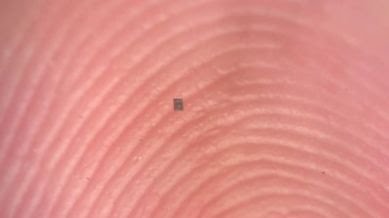
Source The New Indian express
In a groundbreaking advancement in robotics and nanotechnology, scientists have developed the world’s smallest autonomous robots—machines so tiny that they are almost invisible to the naked human eye. The innovation marks a major leap forward in the field of micro- and nano-robotics, with the potential to transform medicine, manufacturing, and environmental monitoring.
According to researchers, these microscopic robots are capable of operating independently without direct human control. Despite their minuscule size—smaller than a grain of sand—the robots can move, respond to stimuli, and perform basic tasks using built-in intelligence. They are designed to navigate complex environments, making them especially promising for applications where larger machines cannot reach.
One of the most promising uses of these tiny robots lies in the medical field. Scientists believe they could one day be deployed inside the human body to deliver targeted drugs, remove harmful blockages, or assist in minimally invasive surgeries. Their ability to function autonomously could significantly improve precision while reducing risks associated with conventional procedures.
Beyond healthcare, the robots could play a vital role in environmental protection and industrial processes. They may be used to detect pollutants in water or air, inspect hard-to-reach infrastructure, or assist in the assembly of ultra-small electronic components. Researchers say their low energy consumption and scalable production methods make them practical for real-world use.
The development was achieved through advanced fabrication techniques that combine materials science, artificial intelligence, and micro-engineering. Scientists involved in the project described the breakthrough as a step toward a future where swarms of intelligent microscopic machines work together to solve complex problems.
While the technology is still in its early stages, experts say further research and testing could bring these nearly invisible robots closer to commercial and medical applications in the coming years. The achievement underscores how rapidly robotics is evolving—and how small the machines of the future may become.









