Source HT
KOLKATA / NEW DELHI — The diplomatic standoff between India and Bangladesh reached a boiling point this week as angry protests erupted in Kolkata, leading to the temporary suspension of visa services at the Bangladesh High Commission in New Delhi. The escalation follows a wave of unrest in Bangladesh triggered by the death of a prominent youth leader and the brutal lynching of a Hindu man.
The Flashpoint: Protests in Kolkata
On Monday, December 22, 2024, Kolkata became the epicenter of Indian outrage. Hundreds of demonstrators, led by Leader of the Opposition Suvendu Adhikari, marched toward the Bangladesh Deputy High Commission in the Beck Bagan area.
The Cause: Protesters were reacting to the horrific lynching of Dipu Chandra Das, a Hindu garment worker in Bangladesh’s Mymensingh district, who was reportedly beaten to death and set on fire over unproven blasphemy allegations.
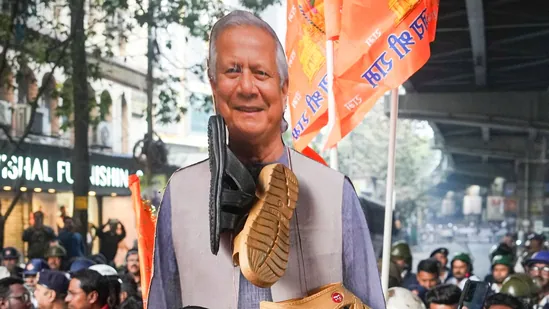
The Scene: Demonstrators burnt effigies of Muhammad Yunus, Chief Adviser of the Bangladesh interim government, and scuffled with Kolkata Police as they were barred from reaching the mission gates.
Ultimatum: Adhikari has announced a one-hour blockade of the India-Bangladesh border on December 24 and a follow-up protest on December 26 if no decisive action is taken against the killers.
Diplomatic Fallout: Visa Services Suspended
The tension immediately translated into a diplomatic freeze.
Consular Services Halted: Citing “unavoidable circumstances” and security concerns, the Bangladesh High Commission in New Delhi suspended all consular and visa services indefinitely on Monday.
Tit-for-Tat Actions: This follows India’s recent decision to temporarily shut its visa application centers in Chattogram and other Bangladeshi cities after their missions were targeted by stone-pelting mobs.
Word of Warning: Bangladesh’s Foreign Affairs Adviser, Touhid Hossain, hinted that Dhaka is considering “scaling back” its diplomatic presence in India if the safety of their personnel cannot be guaranteed.
Key Drivers of the Unrest
The current volatility is rooted in several interconnected events that have destabilized the region:
Event Impact on Relations
Death of Sharif Osman Hadi The death of this 2024 uprising leader in a Singapore hospital sparked mass anti-India protests in Dhaka, with claims (rejected by Delhi) that his assassins fled to India.
Targeting of Minorities The lynching of Dipu Chandra Das has caused deep concern in New Delhi, with the MEA describing the incident as “horrendous” and “barbaric.”
Mission Attacks Attacks on the Indian Assistant High Commission in Agartala and Chattogram earlier this month have forced India to summon Bangladesh’s envoy to demand better security.
Sheikh Hasina’s Status The continued presence of former PM Sheikh Hasina in India remains a major “bone of contention” for the interim government in Dhaka.
The Road Ahead
The Ministry of External Affairs (MEA) has dismissed reports of major security breaches at the Bangladesh mission in Delhi as “misleading propaganda,” emphasizing that India remains committed to the Vienna Convention. However, with national elections in Bangladesh scheduled for February 2025, the atmosphere remains electric.
Analysts warn that the “anti-India” sentiment currently gripping the streets of Dhaka, paired with the communal sensitivity in West Bengal, has created the most significant strategic challenge in the neighborhood in decades.