Source TOI
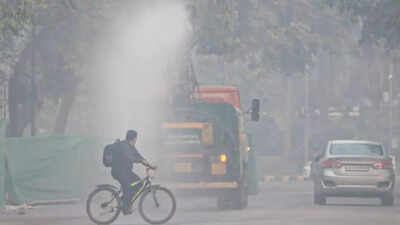
NEW DELHI – Amidst a persistent public health emergency caused by toxic air quality, the Delhi High Court on Wednesday directed the Goods and Services Tax (GST) Council to meet at the earliest to consider lowering or abolishing the tax on air purifiers.
A bench comprising Chief Justice Devendra Kumar Upadhyaya and Justice Tushar Rao Gedela expressed sharp displeasure over the “inaction” of authorities, noting that air purifiers can no longer be classified as “luxury items” but have become a “necessity” for survival in the national capital.
“21,000 Breaths a Day”
During the hearing, the court underscored the severity of the situation with a stark reminder of the physiological toll of pollution.
“You know how many times we breathe in a day? At least 21,000 times. Just calculate the harm you are doing to your lungs just by breathing,” the bench remarked while questioning the Centre on why a 18% GST rate—the highest slab—is still being levied on these devices.
The court emphasized that since the state has been unable to provide citizens with clean outdoor air, the “minimum” it can do is make protective equipment like air purifiers financially accessible to the common man.
Key Highlights of the Court’s Direction:
Urgent Meeting: The GST Council, a pan-India body, has been asked to convene “at the earliest” to deliberate on tax rationalization for purifiers.
Medical Device Classification: The court was hearing a Public Interest Litigation (PIL) filed by advocate Kapil Madan, seeking to reclassify air purifiers as “medical devices,” which would bring them under a lower 5% GST slab.
Temporary Relief: The bench suggested that if a permanent change takes time, the government should consider a temporary tax exemption for a month to address the current “emergency situation.”
Video Conferencing: Acknowledging that physical meetings may take time to organize, the High Court suggested the Council meet via video conferencing to expedite the decision.
The Petitioner’s Argument
The PIL argued that the current 18% tax renders air purifiers “financially inaccessible” to a large segment of the population. It contended that under the Drugs and Cosmetics Act, devices intended for the “prevention of disease” qualify as medical devices. Given that purifiers filter out hazardous particulate matter (PM2.5), they serve a critical preventive health function during Delhi’s “Severe+” AQI episodes.
Government’s Stand
Representing the Union Government, counsel informed the court that GST rates fall under the policy domain of the GST Council, which includes representatives from all States and Union Territories. The court has listed the matter for further hearing on December 26, where authorities are expected to provide a timeline for the Council’s meeting.
As the Air Quality Index (AQI) in Delhi continues to fluctuate between ‘Very Poor’ and ‘Severe’ categories, the court’s intervention highlights a growing judicial focus on the economic barriers to health protection during environmental crises.