Source The CSR journal
New Delhi, January 20, 2026 — For millions of Indian families, the subtle signs of “forgetting where the keys are” or “losing track of dates” often carry a heavy, unspoken fear: Alzheimer’s. Until now, confirming those fears required expensive PET scans or invasive spinal taps.
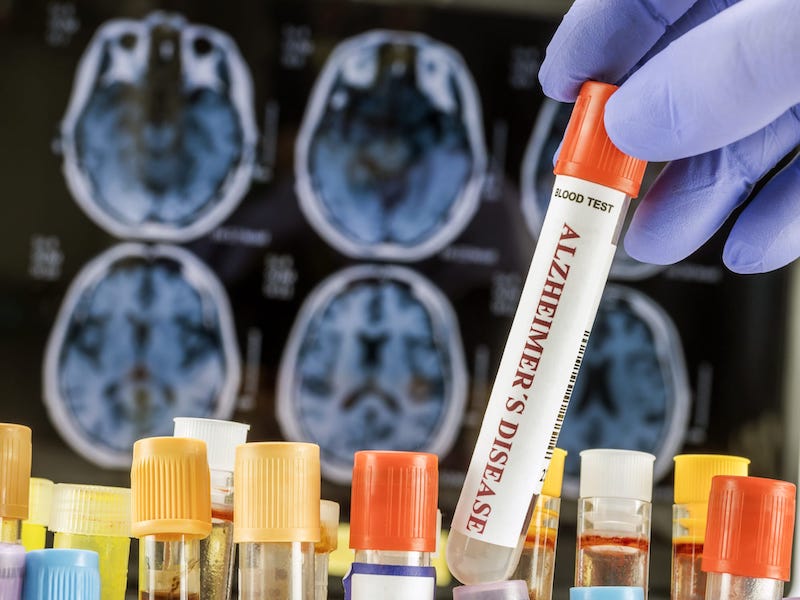
However, a breakthrough in medical technology is set to transform the landscape of neurological care in India. A newly launched AI-integrated blood biomarker test is now capable of detecting Alzheimer’s pathology years before severe symptoms appear, offering a “biology-first” approach to a disease that was previously diagnosed only when it was too late to intervene.
The Technology: A Simple Draw, a Complex Answer
The test, recently introduced by Mahajan Imaging & Labs in collaboration with global partners, utilizes the pTAU217/β-Amyloid1-42 plasma biomarker. These are specific proteins in the blood that serve as early warning signals for the “plaques and tangles” associated with Alzheimer’s.
What makes this “AI-integrated” is the secondary analysis. While the blood test identifies the protein levels, AI algorithms process this data alongside structured imaging—such as MRI and PET scans—to predict disease progression with a high degree of accuracy.
Key Statistics of the New Test:
Accuracy: Boasts a 91.7% positive concordance and 97.3% negative concordance with traditional, expensive amyloid PET scans.
Accessibility: Replaces the need for invasive cerebrospinal fluid (CSF) collection via a lumbar puncture.
Approvals: The test has received clearance from both the USFDA and India’s CDSCO, aligning Indian diagnostics with the latest global standards.
Why This Matters for India
India is facing an escalating dementia crisis. Experts estimate that over 8.8 million Indians aged 60 and above currently live with dementia, a number projected to nearly double to 16.9 million by 2036.
“Early and accurate diagnosis is the cornerstone of effective Alzheimer’s care,” says Dr. M.V. Padma, Chairperson of Neurology at Paras Health. “By integrating blood-based biomarkers with AI-enabled imaging, we can intervene while patients still retain significant cognitive function.”
Who should take the test?
Medical professionals are recommending this diagnostic pathway for:
Individuals over 50 experiencing persistent memory issues.
Those with a family history of Alzheimer’s or dementia.
Patients with Mild Cognitive Impairment (MCI) who need regular monitoring.
Shifting the Paradigm: From Symptoms to Biology
Historically, Alzheimer’s was diagnosed by ruling out other conditions after symptoms became obvious. This new protocol acts as a primary gatekeeper. If the blood test shows “positive” or “borderline” results, AI-driven MRI protocols are then used to confirm the diagnosis.
This “biology-first” approach allows families more time to plan and, more importantly, opens the door for new disease-modifying therapies that are most effective in the earliest stages of the disease.