Source BBC
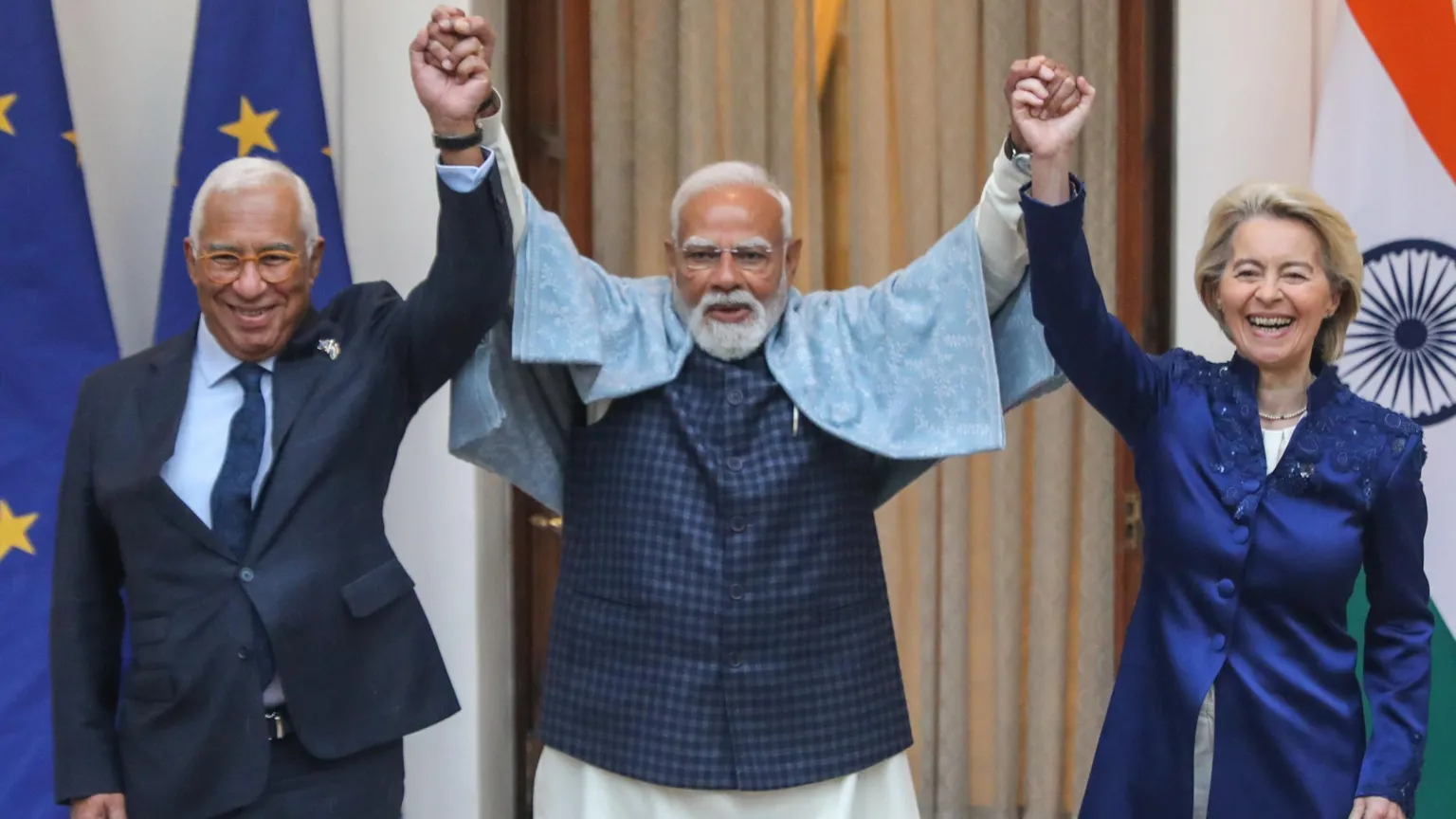
NEW DELHI – In a move that reshapes the landscape of global commerce, India and the European Union officially concluded negotiations for a massive Free Trade Agreement (FTA) today, January 27, 2026. Dubbed the “mother of all deals” by leadership on both sides, the pact marks the end of an 18-year journey to align the world’s most populous nation with its largest trading bloc.
The agreement was finalized during a high-profile summit at Hyderabad House, attended by Indian Prime Minister Narendra Modi, European Commission President Ursula von der Leyen, and European Council President Antonio Costa.
Key Highlights of the Agreement
The deal creates a unified market of nearly 2 billion people, representing roughly 25% of the global GDP. It is expected to double bilateral trade in goods and services by 2032.
Tariff Eliminations: India will remove or reduce duties on approximately 96.6% of EU exports, while the EU will provide duty-free access for nearly 99% of Indian goods by value.
Consumer Gains: Luxury items such as European cars, wines, and spirits will see drastic price drops. Tariffs on high-end cars will be slashed from 110% to 10% over five years.
Export Boost: Indian labor-intensive sectors—including textiles, leather, gems, jewelry, and marine products—will gain immediate, preferential access to the European market.
Climate & Security: Beyond trade, the two sides signed a Security and Defence Strategic Partnership and established a joint platform for climate action, supported by a €500 million EU commitment toward India’s green transition.
A “New Blueprint” for Prosperity
Speaking at the summit, Prime Minister Modi described the pact as more than just a commercial treaty.
“This is not just a trade agreement, but a new blueprint for shared prosperity,” Modi stated. “It sends a clear message to the world that rules-based cooperation remains the most effective path to stability and growth.”
Ursula von der Leyen echoed this sentiment, noting that the deal offers a strategic alternative during a time of heightened global uncertainty and shifting trade alliances.
Economic Impact at a Glance
Feature Impact/Detail
Annual Duty Savings Estimated €4 billion per year
Market Size ~2 Billion Consumers
Auto Tariffs Gradually falling from 110% to 10%
Wine & Spirits Tariffs cut from 150% to as low as 20%
Services Unprecedented access to financial and maritime sectors
While the negotiations have concluded, the deal must still undergo “legal scrubbing” and formal ratification by the European Parliament. Officials expect the agreement to be fully implemented by early 2027, though Commerce Minister Piyush Goyal expressed hope to see the first phase of implementation within the current calendar year.