
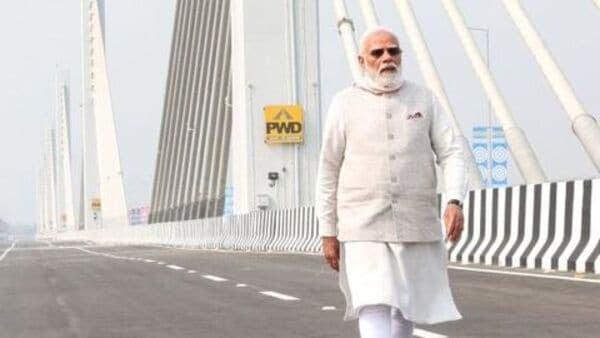
Source Mint
NEW DELHI — Prime Minister Narendra Modi has officially etched his name into the annals of Indian political history, surpassing a monumental milestone to become the country’s longest-serving head of government.
As of this week, Modi has completed 8,930 days in high office—a combined tenure spanning his transformative years as the Chief Minister of Gujarat and his decade-plus leadership as Prime Minister of India. With this achievement, he overtakes the record previously held by India’s first Prime Minister, Jawaharlal Nehru, in terms of total days spent heading a government.
A Journey Defined by Persistence
Supporters and party colleagues have lauded the Prime Minister not just for the length of his service, but for the “unwavering dedication” he has shown since first taking the oath as Chief Minister of Gujarat on October 7, 2001.
Senior officials within the government highlighted that the Prime Minister’s path has been one of personal sacrifice. “He gave up a life of comfort to serve the nation,” noted a senior cabinet minister. “From the reconstruction of post-earthquake Kutch to the digital and infrastructural revolution we see today, his 8,930 days represent a relentless pursuit of ‘Sabka Saath, Sabka Vikas’ (Together with all, Development for all).”
The Statistical Breakdown
To understand the scale of this record, it is helpful to look at the two distinct chapters of his executive career:
Phase Role Start Date Key Focus
Chapter 1 Chief Minister of Gujarat Oct 2001 Economic reform, industrialization, and disaster recovery.
Chapter 2 Prime Minister of India May 2014 Digital public infrastructure, global diplomacy, and welfare schemes.
While Jawaharlal Nehru still holds the record for the longest continuous tenure specifically as Prime Minister (nearly 17 years), Modi’s record accounts for the total cumulative time spent as the chief executive of a state or the union.
Impact and Legacy
The Prime Minister’s journey is often cited by political analysts as a masterclass in political longevity and adaptive governance. Under his leadership, India has climbed to become the world’s fifth-largest economy, with significant strides made in space exploration, renewable energy, and manufacturing.
Critics and supporters alike agree that this milestone marks a significant shift in the Indian political landscape, reflecting a move toward high-octane, delivery-oriented governance that has resonated with a massive segment of the Indian electorate.
As he continues his current term, the focus remains on the “Viksit Bharat 2047” vision—a roadmap to turn India into a fully developed nation by the centenary of its independence.









