
Source HT
New Delhi / Mangaluru, March 2, 2026
Indian aviation is navigating significant disruption amid escalating conflict in the Middle East involving the United States, Israel, and Iran, with airlines adjusting operations and flight schedules in response to widespread airspace closures and safety advisories.
In a latest operational update, Air India Express will resume flight operations to and from Muscat starting March 3, according to official sources citing the airline’s statement to news agencies.
The resumption comes after a period of curtailed services triggered by regional tensions that saw many Indian carriers suspend routes to the Gulf and Middle East as airspace over several countries, including the UAE, Iraq, and Saudi Arabia, faced restrictions due to security concerns.
Airlines Struggle with Airspace Disruptions
The conflict, which intensified following U.S. and Israeli strikes in Iran, has led to the temporary closure of key air corridors across West Asia. This has severely disrupted flight operations globally — with Gulf aviation hubs like Dubai, Abu Dhabi, and Doha experiencing prolonged shutdowns and affecting tens of thousands of passengers.
Several Indian carriers, including SpiceJet and Akasa Air, have canceled multiple Gulf-bound flights for March 2 and 3, urging travellers to check their flight statuses regularly.
Operational and Passenger Impact
The disruptions have resulted in:
Thousands of international flights canceled or rerouted;
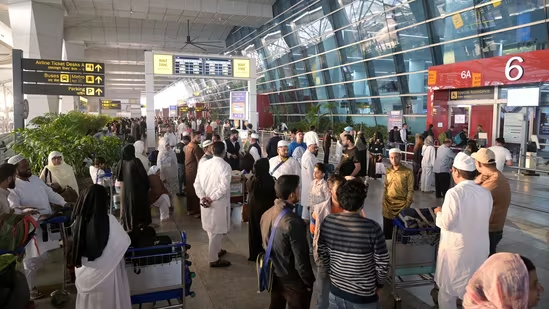
Passengers stranded in transit hubs;
Airlines offering flexible rebooking or refunds due to the evolving situation.
Major airlines have adapted by suspending services temporarily and planning phased resumption based on safety evaluations and airspace availability.
Resumption of Muscat Services
The decision by Air India Express to restart services on the Muscat route reflects efforts to restore connectivity for travellers, including expatriate communities with strong ties between India and Oman. Flights scheduled to operate from March 3 aim to provide a crucial link for passengers after days of irregular operations.
Airline authorities and civil aviation regulators continue to monitor the situation closely, balancing safety imperatives with the need to maintain international travel links as tensions evolve in the region.









