
Source The economics Times
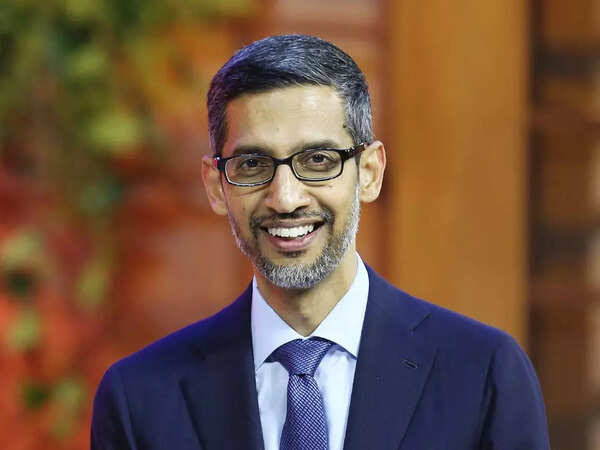
MOUNTAIN VIEW — Alphabet Inc. has unveiled a new, high-stakes compensation structure for CEO Sundar Pichai that could see him earn up to $692 million over the next three years. The plan, revealed in recent SEC filings and first reported by the Financial Times, underscores the board’s aggressive push to link executive rewards with the performance of both Google’s core business and its ambitious “Other Bets.”
Breaking Down the $692 Million
The package is a mix of traditional stock awards and new, speculative incentives. While the headline figure is eye-watering, much of it is “at risk,” meaning Pichai only sees the full amount if Alphabet and its subsidiaries hit specific, ambitious milestones.
Base Salary: Remains steady at $2 million per year, a figure unchanged since 2020.
Performance Stock Units (PSUs): Targeted at $126 million, these are tied to Alphabet’s total shareholder return relative to the S&P 100. If Alphabet significantly outperforms its peers, this could double to $252 million.
Restricted Stock (GSUs): A “time-based” award of $84 million that vests monthly, provided he remains with the company.
The “Bet” Incentives: In a new twist, Alphabet has added $350 million in potential incentives tied specifically to the valuation of:
Waymo (Self-driving technology)
Wing (Drone delivery)
Strategic Incentives for “Other Bets”
The inclusion of Waymo and Wing in the pay deal is a strategic signal to investors. For years, Alphabet’s “Other Bets” have been viewed as expensive experiments. By tying nearly half of Pichai’s potential compensation to these subsidiaries, the board is making it clear that the CEO’s primary mission is to transition these projects from moonshots into profitable, standalone giants.
Under the new plan, Pichai could receive up to $260 million from Waymo and $90 million from Wing if their “fair value” doubles over the three-year period.
A Decade of Growth
The pay hike comes as Alphabet continues to dominate the tech landscape. Since Pichai took the helm of Google in 2015 and Alphabet in 2019, the company’s market capitalization has skyrocketed from roughly $535 billion to nearly $3.6 trillion.
The board defended the package, stating that “current and previous incentives have benefited Alphabet and its stockholders significantly.” However, the sheer scale of the deal is likely to reignite debates over executive pay gaps, especially as the tech industry continues to navigate a landscape of efficiency drives and selective layoffs.









