
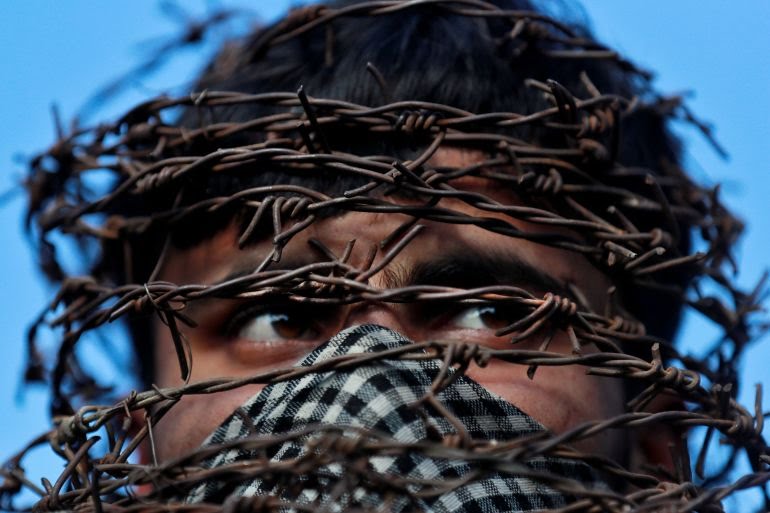
Source Aljajeera
NEW DELHI – The relationship between India and Israel has long been defined by high-level defense deals and agricultural cooperation. However, in recent years, observers and critics alike have noted a deeper, more structural shift. From the high-altitude valleys of Kashmir to the urban centers of Uttar Pradesh, the Indian state is increasingly adopting administrative and security tactics that mirror the Israeli approach to territory and dissent.
This evolution—often dubbed the “Israel Model”—marks a transition from a purely transactional partnership to an ideological and tactical alignment that is reshaping India’s internal landscape.
The Kashmir Shift: Integration and Settlement
Following the 2019 abrogation of Article 370, which stripped Jammu and Kashmir of its semi-autonomous status, the region has undergone a massive administrative overhaul. Analysts point to several parallels with Israeli policies in the West Bank:
Domicile Law Changes: New regulations now allow non-locals to purchase land and settle in the region, a move critics compare to settlement patterns aimed at altering the demographic makeup of a disputed territory.
Security Saturation: Kashmir remains one of the most militarized zones in the world. The use of high-tech surveillance, including facial recognition and drone monitoring, mirrors the “Smart Wall” and “Red Wolf” systems used by Israeli forces.
Administrative Control: Much like the direct military administration in parts of the Palestinian territories, Kashmir is currently governed directly from New Delhi through a Lieutenant Governor, with local legislative powers significantly curtailed.
“The ideological affinity between Hindutva and Zionism has moved from the realm of rhetoric to the realm of governance. We see it in how land is managed and how populations are monitored,” says a Delhi-based political analyst.
‘Bulldozer Justice’ and Collective Reprisal
One of the most visual shifts in Indian governance is the rise of the “Bulldozer Model.” In states like Uttar Pradesh and Madhya Pradesh, and even in the capital, local authorities have increasingly used heavy machinery to demolish the homes of individuals accused—but not convicted—of crimes or participating in protests.
While officials claim these are “anti-encroachment” drives against illegal structures, human rights groups argue they constitute collective punishment, a tactic long utilized by the Israeli military against the families of Palestinian militants.
Comparison of Demolition Tactics:
| Feature | Israeli Practice (Occupied Territories) | Indian Practice (“Bulldozer Justice”) |
| Official Justification | Security necessity or lack of permits | Illegal construction or “anti-mafia” action |
| Timing | Often follows an attack or protest | Often follows a protest or communal clash |
| Legal Process | Summary military orders | Rapid municipal notices, often bypasses courts |
| Primary Target | Palestinian residents | Minority communities and political dissenters |
The Infrastructure of Spying
The “Israel Model” is perhaps most evident in the digital realm. India has become a significant consumer of Israeli cyber-intelligence tools. The most notable example is Pegasus, the spyware developed by the NSO Group.
Surveillance of Dissent: Reports have linked the software to the monitoring of Indian journalists, opposition leaders, and activists.
Tactical Training: Indian police and paramilitary units now regularly participate in joint training exercises with Israeli counter-terrorism units, adopting “area domination” techniques and urban warfare strategies honed in the streets of Hebron and Gaza.
A Growing Strategic Convergence
Supporters of these moves argue that India is simply “baring its fangs” and adopting the pragmatic, muscular security posture necessary to survive in a hostile neighborhood. For the Modi administration, Israel represents a successful model of a “startup nation” that maintains security through technological superiority and uncompromising force.
However, as India prepares for Prime Minister Modi’s upcoming visit to Tel Aviv later this month, the debate continues over whether this model protects the state at the expense of its democratic foundations.









