
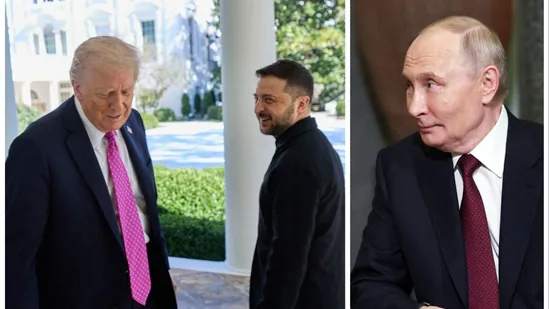
KYIV/WASHINGTON — In a potential watershed moment for the largest conflict in Europe since World War II, Ukrainian President Volodymyr Zelenskyy has unveiled a comprehensive 20-point peace plan negotiated in close coordination with the administration of U.S. President Donald Trump.
The announcement, made on December 24, 2025, marks the most significant diplomatic push toward a ceasefire since the Russian invasion began nearly four years ago. The plan aims to provide a “roadmap for Ukraine’s prosperity” while securing its sovereignty through a complex web of international guarantees.
The Core of the “Trump-Zelenskyy” Plan
While the full text remains classified, President Zelenskyy described the key pillars of the proposal during a press briefing in Kyiv. The plan seeks to balance Ukraine’s territorial integrity with the “art of the deal” pragmatism characteristic of the Trump administration.
Key highlights of the 20-point framework include:
Sovereignty Reaffirmed: All signatories would formally recognize Ukraine as a sovereign state within its internationally recognized borders.
Security Guarantees: Ukraine would receive security assurances from the U.S., NATO, and European partners that “mirror Article 5.” If Russia invades again, global sanctions would be automatically reinstated alongside a coordinated military response.
Monitoring the Line of Contact: A sophisticated monitoring mechanism involving space-based unmanned technology would oversee the frozen front line to ensure early notification of any violations.
Military Strength: Ukraine’s standing army would be maintained at a peacetime level of 800,000 personnel to serve as a permanent deterrent.
Economic “Free Zones”: In a nod to the most contested areas, the plan proposes “free economic zones” or “demilitarized zones” for regions like the Donbas, where current control remains a major sticking point.
Energy Cooperation: A trilateral management system is proposed for the Zaporizhzhia Nuclear Power Plant, involving Ukraine, the U.S., and Russia, with the U.S. serving as the primary manager.
Obstacles to a Final Deal
Despite the momentum, significant “red lines” remain. The Kremlin, while acknowledging receipt of the plan, has reiterated its “maximalist” demands, including the official renunciation of Ukraine’s NATO aspirations and the cession of five Ukrainian regions.
Zelenskyy emphasized that any final agreement involving territorial concessions or the status of the “free economic zones” would likely require a national referendum. “People can choose: this ending suits us or not,” he stated, setting a potential 60-day window for hostilities to cease while the public deliberates.
“We have come significantly closer to finalizing the documents,” Zelenskyy told reporters. “Thanks to these security guarantee documents, we will be able to see a strong Ukraine.”
The Trump Factor
President Trump, who has frequently claimed he could settle the war “in 24 hours,” has utilized his envoys, including Steve Witkoff and Jared Kushner, to bridge the gap between Kyiv and Moscow. Recent high-stakes meetings in Florida and Alaska have reportedly focused on creating a “binding” legal document that prevents a return to fighting.
European leaders, however, remain cautious. While some, like German Chancellor Friedrich Merz, have called for Russian involvement in the next stage, others worry that a “quick peace” might come at the expense of long-term European security.
As of late Wednesday, the world is waiting on Moscow’s official reaction. If accepted as a basis for further talks, the 20-point plan could lead to a formal signing ceremony as early as the first quarter of 2026.









