
Source TOI
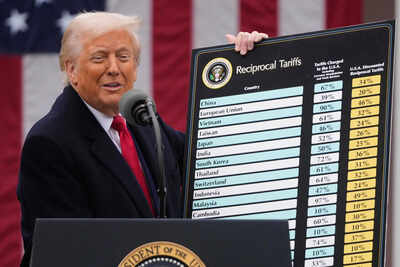
In a significant legal setback for former U.S. President Donald Trump, a federal court has struck down a series of tariffs introduced during his administration, raising fresh questions about the future of U.S. trade policy and its global ripple effects. The ruling, which challenges the legality of certain tariff measures imposed on imports from key trading partners, could reshape ongoing trade negotiations and economic strategies worldwide.
The tariffs, initially justified on grounds of national security and unfair trade practices, had targeted a wide range of goods, including steel, aluminum, and Chinese imports. Critics long argued that the measures increased costs for American consumers and businesses, while supporters maintained they were necessary to protect domestic industries and address trade imbalances.
Following the court’s decision, policy analysts and financial institutions have begun assessing the potential economic fallout. In a research note, the State Bank of India (SBI) proposed what it termed a “counter-intuitive” approach for countries affected by the tariffs. Rather than responding with retaliatory duties or aggressive trade barriers, SBI suggested leveraging the development to strengthen bilateral trade talks and explore new market access opportunities.
According to SBI economists, a restrained and strategic response could benefit emerging markets such as India. By focusing on export diversification, improving competitiveness, and accelerating trade agreements, countries may be able to convert uncertainty into opportunity. The report emphasized that global supply chains remain sensitive to policy shifts, and abrupt retaliation could further destabilize markets.
The ruling also comes at a time when global trade is navigating geopolitical tensions and economic slowdowns. Market reactions have been mixed, with some sectors welcoming the potential easing of trade frictions, while others remain cautious about prolonged legal battles and policy reversals.
Trade experts believe the final outcome may depend on appeals and future political developments. If higher courts uphold the decision, it could mark a broader recalibration of U.S. trade policy. Conversely, a successful appeal could revive elements of the tariff regime.
For now, the court’s intervention has injected fresh uncertainty into the global trade landscape. As governments and businesses reassess their strategies, the emphasis may shift from confrontation to recalibration — a direction SBI argues could ultimately prove more sustainable in a volatile economic environment.









