
Source NDTV
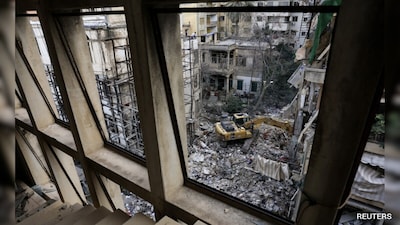
BEIRUT/WASHINGTON – Israeli warplanes launched fresh strikes on Lebanese towns early Friday, signaling that Prime Minister Benjamin Netanyahu intends to maintain military pressure even as U.S. President Donald Trump pushes for a more “low-key” approach to preserve a fragile regional ceasefire.
The strikes, which hit several locations including the southern city of Nabatiyeh, resulted in the deaths of at least ten Lebanese State Security personnel, according to local government sources. The escalation comes just 24 hours after a series of high-stakes phone calls between Washington and Jerusalem intended to de-escalate the conflict.
A Tense Diplomatic Tug-of-War
The White House has been increasingly vocal about its desire to see the fighting in Lebanon scaled back. President Trump confirmed to reporters on Thursday that he had asked Netanyahu to “calm down” the strikes to ensure that a broader, two-week ceasefire with Iran—currently being negotiated in Islamabad—does not collapse.
Reports suggest the communication between the two leaders has turned “tense.” According to sources familiar with the matter, the U.S. administration warned that if Israel did not show a willingness to enter direct talks with the Lebanese government, Washington might move to unilaterally declare a ceasefire.
Netanyahu’s Dual Strategy
In a short video address, Prime Minister Netanyahu maintained a firm stance, stating clearly, “There is no ceasefire in Lebanon.” However, in a nod to American pressure, he simultaneously authorized his government to open direct negotiations with Lebanon “as soon as possible.”
The Israeli strategy appears to be one of “talks under fire.” The Prime Minister’s Office outlined two primary goals for these upcoming negotiations:
The total disarmament of Hezbollah.
The establishment of formal, peaceful relations between Israel and Lebanon.
The View from Beirut
In Lebanon, the situation remains dire. While Lebanese Prime Minister Nawaf Salam has ordered the national army to attempt to regain control of Beirut, the political landscape is fractured. Hezbollah members in the Lebanese parliament have already rejected the prospect of direct talks with Israel unless a full truce is implemented and Israeli forces withdraw from Lebanese territory.
As the U.S. preparing to host a delegation in Washington next week for further discussions, the humanitarian crisis continues to deepen. Over 300 people were reported killed in the last 48 hours of bombardment, leaving the upcoming diplomatic efforts hanging by a thread.
“We are working in full coordination with our allies, but Israel’s security and the removal of the threat from our northern border remain our non-negotiable priority.”
— Statement from the Israeli Prime Minister’s Office









