
Source TOI
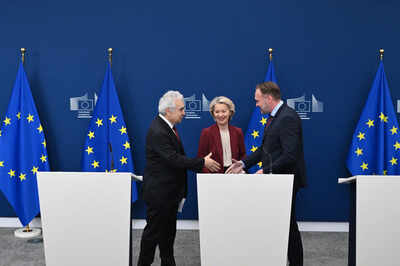
The European Union (EU) has formally agreed on a roadmap to end all imports of natural gas from Russia by autumn 2027, marking a major step in its efforts to cut energy dependence on Moscow.
Here’s a detailed look at how the plan works:
What’s Being Banned – and When
The ban covers both pipeline gas and liquefied natural gas (LNG) imported directly or indirectly from Russia.
For new supply contracts signed after 2025, imports will be banned starting 1 January 2026.
For short-term deals signed before 17 June 2025, prohibition starts from 25 April 2026 (LNG) and 17 June 2026 (pipeline gas).
Existing long-term contracts will remain valid until final cut-off: end of 2027 (with precise deadline varying — e.g. 30 September 2027 for pipeline gas, potentially extended to 1 November 2027 depending on gas-storage levels).
Once the law is in force, Russian-origin gas will only be allowed in extremely limited, exceptional cases such as emergencies impacting energy security.
Why the EU Is Doing This
After Russia’s invasion of Ukraine in 2022, the EU viewed continued energy imports as indirectly funding Moscow’s war efforts.
The decision is part of a larger strategy called REPowerEU — a plan set out by the European Commission to diversify energy sources, ramp up renewables, and secure independent energy supply.
The EU sees this as a move toward long-term energy sovereignty, shielding itself from energy supply disruptions and geopolitical blackmail.
Transitional Arrangements & Exceptions
The law allows a transition period so that existing contracts and stored gas can be phased out without causing immediate energy shocks.
Countries with land-locked geography or special energy security needs (notably Hungary and Slovakia) may receive temporary exemptions or suspension clauses under defined emergency conditions.
There are additional regulatory measures: importers will need to obtain prior authorization, declare the origin of gas in detail, and ensure that no “shadow-fleet” or re-labelled gas can be used to bypass the ban.
Wider Significance & Expected Impact
The move signals the end of an era: the EU declares Russian gas imports are no longer acceptable even if there is a future peace deal in Ukraine.
Energy dependency on Russia has already fallen sharply: the share of Russian gas in EU’s energy mix fell from about 45% before 2022 to roughly 13–19% by mid-2025.
The ban is expected to accelerate the adoption of alternative sources — including LNG from non-Russian suppliers, renewables, and more domestic/European energy production — strengthening EU’s energy security in the long run.
Conclusion: The EU’s decision to strip Moscow of a major energy revenue stream by 2027 is more than an economic sanction — it marks a fundamental reorientation of the continent’s energy strategy. Through phased bans, strict regulatory safeguards, and transition provisions, Brussels aims to wean Europe off Russian energy while preserving supply-security. The countdown to a post-Russian-gas era has officially begun.









