
Source The eurasian time
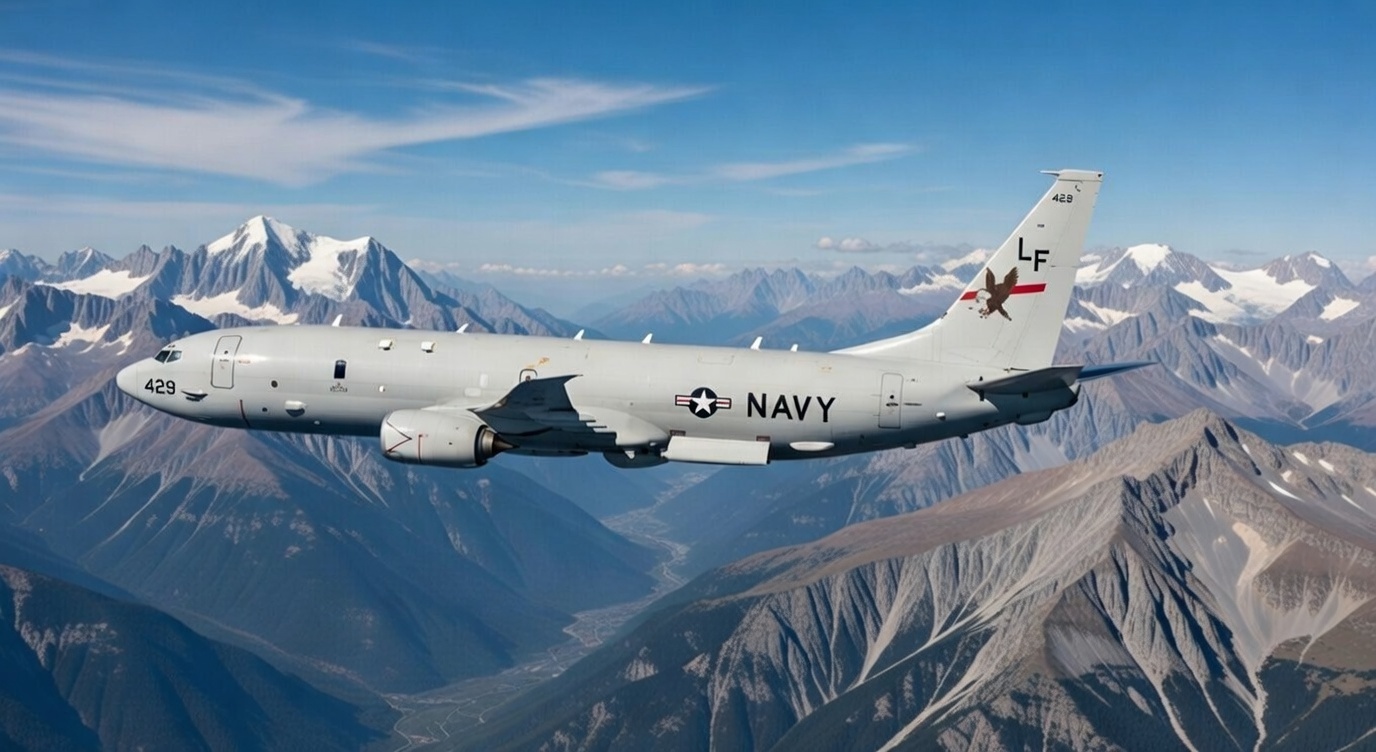
NEW DELHI — As maritime competition in the Indo-Pacific reaches a fever pitch, the Indian Navy is doubling down on its most formidable asset: the Boeing P-8I Poseidon. Often referred to as the “Submarine Hunter,” this U.S.-supplied aircraft has emerged as the centerpiece of India’s strategy to neutralize the growing presence of the People’s Liberation Army Navy (PLAN) in the Indian Ocean.
With the Indian government recently greenlighting a $3 billion deal for six additional aircraft, New Delhi is sending a clear signal that it intends to maintain “sea denial” capabilities against any underwater or surface threats.
The ‘Submarine Hunter’ in Action
The P-8I is not merely a surveillance plane; it is a multi-mission powerhouse. Based on the Boeing 737-800 airframe, the Indian “I” variant is specifically customized with unique sensors that make it even more potent than the standard P-8A used by the U.S. Navy.
Magnetic Anomaly Detector (MAD): Unlike many global variants, India’s P-8I features a MAD sensor, allowing it to detect the minute magnetic signatures of submerged Chinese submarines that are trying to run silent.
Aft Radar: It is equipped with a 360-degree “OceanEye” radar, ensuring no vessel can sneak up behind the aircraft during long-range patrols.
Lethal Arsenal: The Poseidon doesn’t just watch; it strikes. It carries Mk-54 lightweight torpedoes for submarines and Harpoon anti-ship missiles to take out surface combatants.
“The P-8I is the most potent platform to carry out surveillance—be it over the vast blue waters of the Indian Ocean or the rugged peaks of the Himalayas,” noted a senior defense analyst, referring to the aircraft’s surprising utility during the Galwan Valley and Doklam standoffs.
Countering China’s “String of Pearls”
For years, Beijing has expanded its footprint through the “String of Pearls” strategy, utilizing dual-use ports and “research vessels” to map the Indian Ocean floor. The P-8I has become the primary tool for shadowing these assets.
By operating out of INS Rajali (Tamil Nadu) and INS Hansa (Goa), the fleet can monitor critical chokepoints like the Strait of Malacca. This ensures that any Chinese vessel entering the Indian Ocean is logged, tracked, and—if necessary—targeted long before it reaches India’s shores.
Feature Capability
Mission Radius Over 1,200 nautical miles (plus on-station endurance)
Max Speed 907 km/h
Intelligence Integrated acoustic processing & high-bandwidth datalinks
Strategic Edge Interoperability with Quad partners (US, Australia, Japan)
Strategic Synergy with the Quad
One of the most significant advantages of the P-8I is its role in “Network-Centric Warfare.” Since the U.S., Australia, and Japan all operate versions of the Poseidon, the Indian Navy can seamlessly share real-time data with its Quad partners. This creates a “transparent ocean” where Chinese movements are visible to all allied forces simultaneously.
The addition of six more aircraft will bring India’s total fleet to 18, providing the “persistence” needed to keep eyes on the water 24/7. When paired with the upcoming MQ-9B SeaGuardian drones, India’s maritime domain awareness will be virtually impenetrable.









