
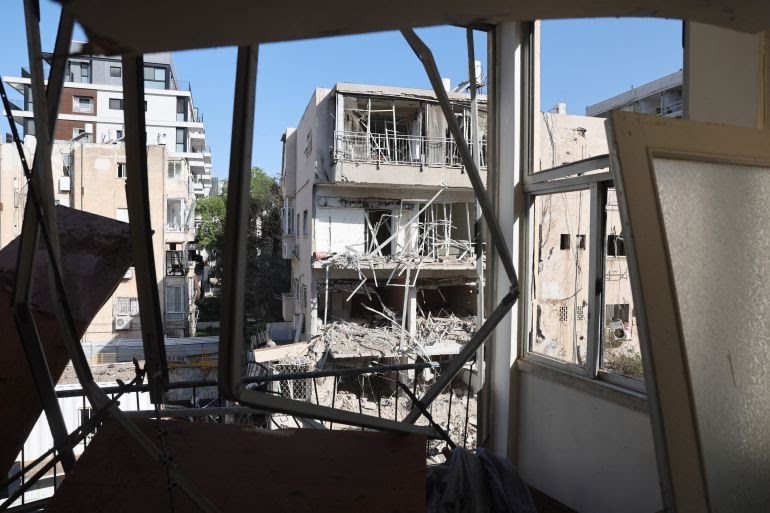
Source Aljajeera
Iran launched a new wave of missiles toward Israel on Tuesday, marking a sharp escalation in the ongoing conflict between the two regional powers. The latest strikes triggered air raid sirens across multiple Israeli cities, forcing residents to seek shelter as defense systems worked to intercept incoming projectiles.
According to initial reports, several missiles struck areas near Tel Aviv, causing damage to residential buildings and vehicles while leaving multiple people injured. Some of the missiles carried significant explosive payloads, highlighting a shift in the scale and intensity of the attacks.
Israeli authorities confirmed that while many of the missiles were intercepted, a number managed to penetrate the country’s air defenses. Emergency services were deployed immediately to affected areas, assessing damage and assisting the injured. Sirens were also reported in northern and southern regions, indicating the widespread nature of the assault.
The missile barrage is part of a continuing exchange of strikes between Iran and Israel that has intensified over recent weeks. Iran has described its actions as retaliation for Israeli airstrikes targeting its military infrastructure, while Israel has vowed to continue operations against Iranian assets and allied groups in the region.
The conflict has also drawn in other regional and global players, raising concerns about a broader war in the Middle East. The United States has continued military operations against Iranian targets, although it recently announced a temporary pause on strikes against Iran’s energy infrastructure to allow space for potential diplomatic efforts.
Meanwhile, tensions remain high as both sides signal no immediate willingness to de-escalate. Analysts warn that continued missile exchanges and retaliatory strikes could further destabilize the region, with civilian populations bearing the brunt of the violence.
As the situation develops, global leaders have urged restraint, but the latest barrage suggests that prospects for a near-term resolution remain uncertain.









