
Source TOI
PUNE – As rising fuel prices and unpredictable LPG supply chains continue to squeeze household budgets, one engineer in Pune has decided to take matters into his own hands—literally. By transforming daily kitchen waste into clean cooking fuel, he is proving that the solution to the energy crisis might just be sitting in our trash cans.
Engineering a Greener Kitchen
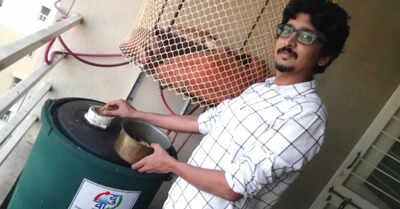
Meet Rajesh Deshpande, a mechanical engineer who refused to let the “out of stock” notification on his gas booking app ruin his dinner plans. Using his technical background and a passion for sustainability, Deshpande has installed a compact, DIY biogas plant in his backyard that converts organic waste into usable methane gas.
“We produce so much organic waste every day—peels, leftover food, spoiled vegetables,” Deshpande explained. “Instead of sending it to a landfill where it creates environmental hazards, I realized I could harness that energy right here at home.”
How It Works: The “Kitchen-to-Flame” Process
The system is surprisingly simple but highly efficient. It relies on anaerobic digestion, a process where microorganisms break down biodegradable material in the absence of oxygen.
The Digester: A sealed tank where the “magic” happens.
The Feedstock: About 2kg of kitchen waste daily provides enough gas for nearly two hours of cooking.
The Output: Pure biogas that burns with a clean, blue flame, identical to commercial LPG.
“The beauty of this system isn’t just the free gas,” says Deshpande. “The byproduct is a nutrient-rich liquid fertilizer that I use for my balcony garden. It’s a perfect circular economy.”
Breaking the Dependency
For many residents in Pune, the switch to biogas isn’t just about being “green”—it’s about reliability. With the volatility of global fuel markets, having a decentralized energy source provides a sense of security.
While the initial setup requires a small investment and some space, Deshpande believes the system pays for itself within a year. More importantly, it offers a buffer against the frequent price hikes and delivery delays that plague the LPG sector.
A Model for the Future?
Local environmentalists are now looking at Deshpande’s model as a potential blueprint for urban waste management. If every household or housing society adopted similar technology, the burden on municipal waste collection would drop significantly, and the city’s carbon footprint would shrink.
As for Deshpande, he’s just happy to keep the burners lit. “I don’t worry about the delivery truck anymore,” he says with a smile. “As long as we’re eating, we’re generating fuel.”









