Source Reuters
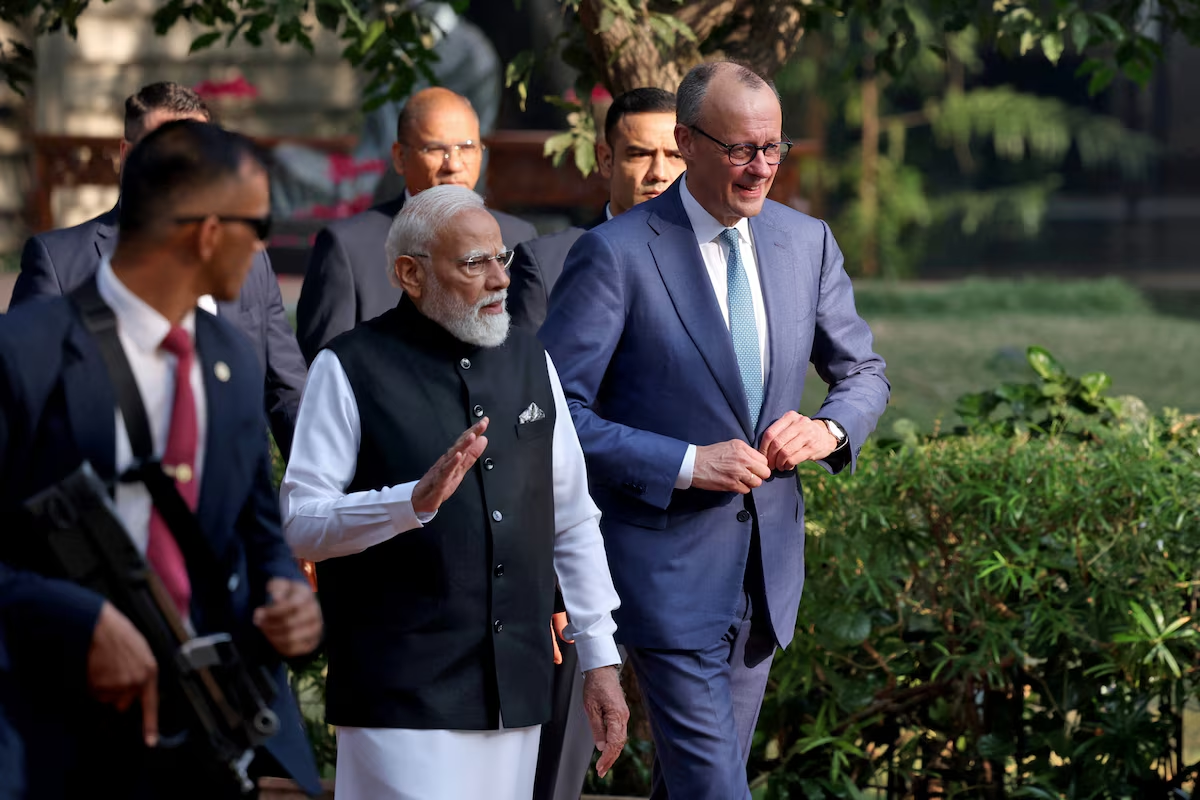
Berlin: German opposition leader Friedrich Merz has indicated that the European Union and India could reach a long-awaited trade agreement by the end of January, raising hopes of a breakthrough in negotiations that have been stalled for years.
Speaking on the sidelines of a policy interaction, Merz said recent diplomatic engagements and growing strategic convergence between Brussels and New Delhi have created momentum for concluding the deal. He noted that both sides see strong economic and geopolitical reasons to deepen cooperation amid global supply chain disruptions and rising trade tensions elsewhere.
The proposed EU-India free trade agreement (FTA) aims to significantly boost bilateral trade, which currently stands at over €120 billion annually. The pact is expected to cover key areas such as market access for goods and services, investment protection, intellectual property rights, digital trade, and sustainable development.
Merz emphasized that Germany, as Europe’s largest economy, is keen to expand trade ties with India, particularly in sectors like automobiles, green technology, pharmaceuticals, and advanced manufacturing. He added that European companies view India as a crucial growth market, while India stands to benefit from greater access to EU markets and technology.
Negotiations between the EU and India were relaunched in 2022 after a long hiatus, but differences over tariffs, data protection norms, labor standards, and environmental commitments have slowed progress. However, recent high-level meetings and political signals from both sides suggest renewed urgency to finalize the agreement.
While no official confirmation has been issued by the European Commission or the Indian government on a January deadline, Merz’s remarks have fueled optimism that a political push could help bridge remaining gaps.
If concluded, the EU-India trade deal would rank among the bloc’s most significant trade agreements, strengthening economic ties between two major global players and reshaping trade dynamics in the Indo-Pacific region.