
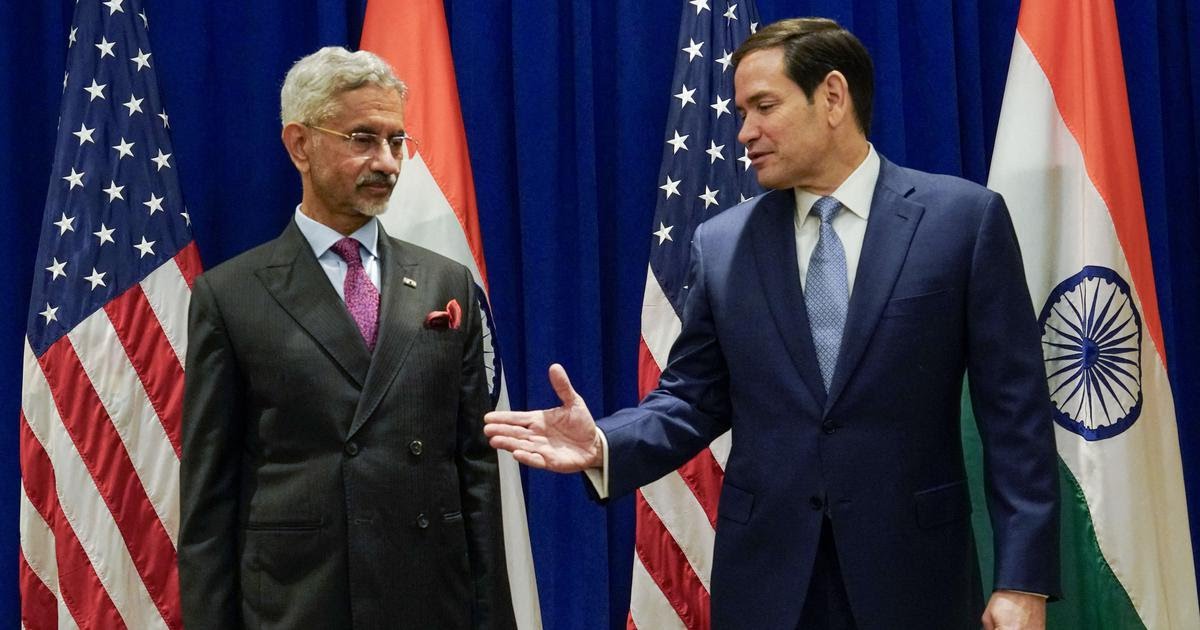
Source scroll.in
WASHINGTON D.C./NEW DELHI – The release of the Trump administration’s new National Security Strategy (NSS) has prompted a sobering reassessment in New Delhi, with analysts suggesting India has been relegated to a secondary role, exposing the Modi government’s “wishful thinking” regarding the “special relationship” with the United States.
The 2025 NSS, which outlines America’s core foreign policy priorities, focuses heavily on the Western Hemisphere, a robust defence industrial base, and a transactional approach to alliances—an approach where India appears to fail the test of providing essential contributions to America’s core national interests.
A Transactional Turn: From ‘Leading Global Power’ to ‘Party to be Managed’
In stark contrast to the language of previous administrations—and even President Trump’s own first term, which hailed India as a “leading global power”—the new document mentions India with a distinct cooling of tone and less strategic weight.
The strategy’s primary substantive mention of India is in the context of the Quadrilateral Security Dialogue (Quad) with Australia and Japan, encouraging New Delhi “to contribute more to Indo-Pacific security.” Crucially, however, the strategy does not suggest that India’s independent rise is essential to the global balance of power.
Adding to New Delhi’s discomfort, the NSS credits President Trump with having “negotiated peace… between Pakistan and India” during a recent military encounter, alarming Indian foreign policy circles who view the reference as an unwelcome reversion to the historical hyphenation of the two nations.
Key Shift: The document lays out clear filters for determining American foreign priorities: the protection of core national interests. By this measure, India’s limited naval reach, reluctance to sign essential defence-access agreements, and lack of integration into NATO-like frameworks mean it “cannot contribute meaningfully” to the core missions of maritime security and high-end technological advantage prioritized in the Indo-Pacific.
The Immigration Conundrum and ‘America First’ Clash
Beyond strategic military concerns, the NSS’s emphasis on tightening border control and viewing immigration as a national security threat directly clashes with India’s long-standing diplomatic efforts to secure better visa regimes for its high-skilled professionals.
Prime Minister Narendra Modi’s consistent high-profile engagements with President Trump—including the famous “Howdy Modi” rally and the recent elevation of the relationship to a “Comprehensive Global Strategic Partnership”—were rooted in a belief that personal chemistry could override geopolitical and economic divergence. This appears to be the core of New Delhi’s “wishful thinking.”
The transactional nature of the new “America First” strategy suggests that personal ties and populist affinity are insufficient to safeguard the relationship against the cold, hard logic of national interest, as further evidenced by the imposition of heavy tariffs on Indian goods and a renewed, albeit tactical, tilt toward engaging Pakistan.
A Wake-Up Call for Strategic Autonomy
The new U.S. posture signals a clear shift toward “burden-sharing,” where allies are expected to assume primary responsibility for their own regional security without expecting the U.S. to “prop up the entire world order.”
For India, a nation that aspires to shape the future world order, being a “footnote” in America’s foundational strategic vision is being interpreted as a profound wake-up call.
Moving forward, the challenge for the Modi government will be to leverage the positive aspects—such as continued cooperation in the Quad and on critical technologies—while adapting to a less predictable and more transactional Washington. Analysts suggest this turbulence offers an opportunity for India to redefine and enhance its international role by strengthening ties with other like-minded middle powers like Japan, Australia, France, and key Southeast Asian states.









