
Source TOI
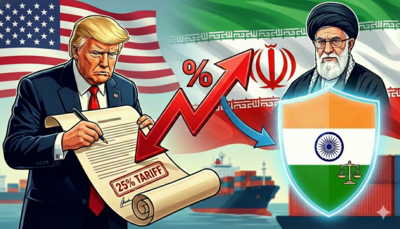
NEW DELHI – Government sources and industry experts are projecting a minimal impact on the Indian economy following U.S. President Donald Trump’s announcement of an additional 25% tariff on countries conducting business with Iran.
The newly proposed measures, aimed at tightening the “maximum pressure” campaign against Tehran, have raised concerns globally. However, Indian officials suggest that New Delhi’s limited trade exposure with Iran will shield the nation from any significant fallout.
Trade by the Numbers
According to government data, Iran does not currently rank among India’s top 50 trading partners. In the 2024-25 fiscal year, total bilateral trade between the two nations stood at approximately $1.68 billion. To put this in perspective, this accounts for just 0.15% of India’s overall global trade.
“Of the $68 billion in total imports Iran received in 2024, the bulk came from China, the UAE, and the EU. India’s share was only about $1.2 billion,” a government source noted. “Given these small volumes, the direct effect of the US tariff hike is expected to be negligible.”
Humanitarian Exemptions Provide a Buffer
A key factor in India’s optimism is the nature of its exports. Ajay Sahai, Director General of the Federation of Indian Export Organisations (FIEO), emphasized that Indian banks and companies remain strictly compliant with the U.S. Office of Foreign Assets Control (OFAC) norms.
“India primarily engages in permitted humanitarian trade with Iran, such as food items (rice, tea, sugar) and pharmaceuticals,” Sahai stated. “Because these goods are generally exempt from broader sanctions, there is no basis to anticipate a major adverse impact.”
Currency Volatility a Bigger Threat
While the tariffs are grabbing headlines, exporters are more concerned about the sharp depreciation of the Iranian Rial. Industry leaders warn that a weakening Iranian currency reduces the purchasing power of local consumers and increases the risk of cancelled contracts—a hurdle that poses a more immediate challenge to Indian merchants than the 25% levy from Washington.
Strategic Interests: The Chabahar Port
The news comes at a delicate time for Indo-US relations. While the U.S. has recently targeted specific Indian firms for allegedly facilitating “dark fleet” oil transfers, it has also extended sanctions waivers for India’s operation of the Chabahar Port. The port remains a vital strategic link for India to access Afghanistan and Central Asia, bypassing Pakistan.
As the situation evolves, the Ministry of Commerce is reportedly “closely studying” the implications of the executive order, though the prevailing sentiment among New Delhi’s policymakers remains one of cautious confidence.









