Source Reuters
NEW DELHI – The Indian Ministry of External Affairs (MEA) on Wednesday formally summoned the Bangladesh High Commissioner, M. Riaz Hamidullah, to register a strong protest over what it described as a “deteriorating security environment” in Bangladesh.
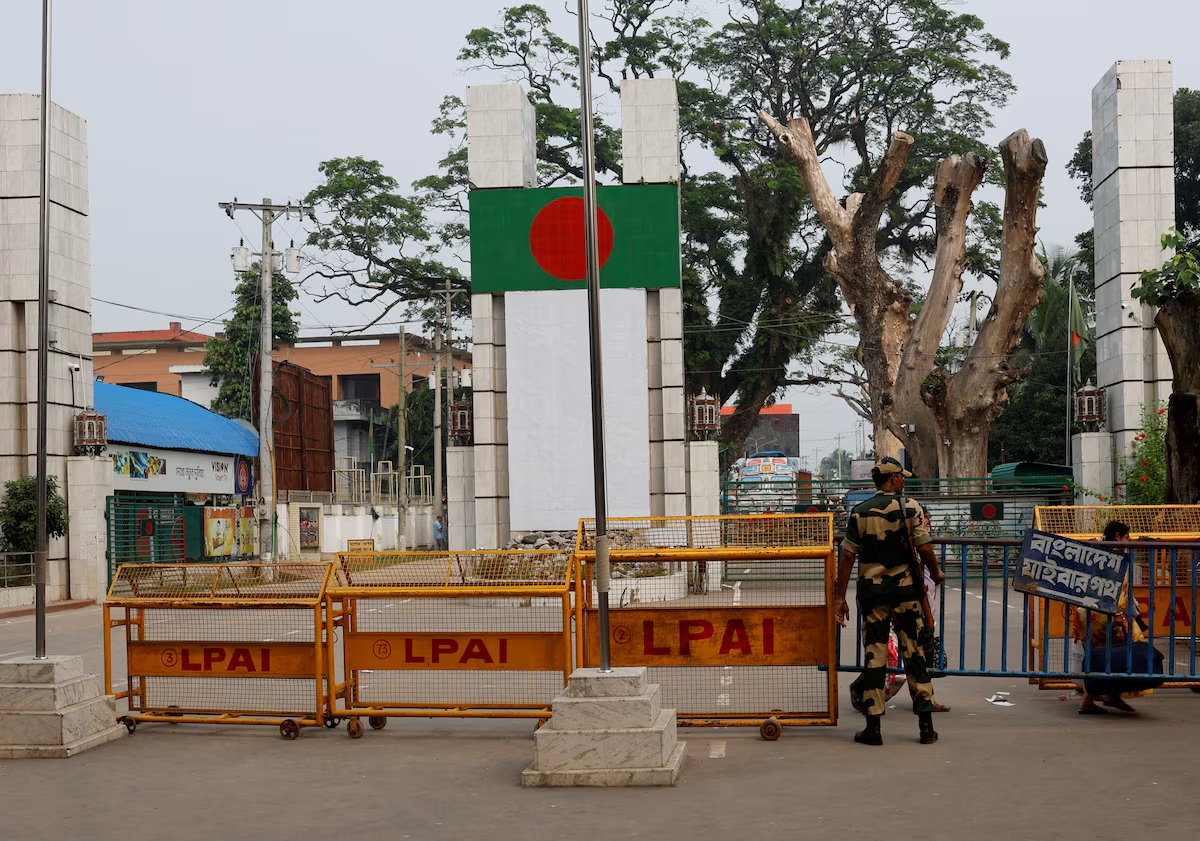
The diplomatic move follows specific threats directed at the Indian High Commission in Dhaka and a surge in anti-India rhetoric from political leaders within the neighboring country.
Escalating Tensions and Security Threats
According to an official statement from the MEA, High Commissioner Hamidullah was apprised of India’s “strong concerns” regarding planned activities by extremist elements. These groups had reportedly announced intentions to create a “security situation” around the Indian diplomatic mission in the capital city.
“His attention was drawn, in particular, to the activities of some extremist elements who have announced plans to create a security situation around the Indian Mission in Dhaka,” the MEA stated.
The summons follows a highly controversial speech by Hasnat Abdullah, a leader of the National Citizen Party (NCP). Abdullah reportedly threatened to isolate India’s “Seven Sisters” (the Northeastern states) and suggested providing sanctuary to separatist groups if Bangladesh were to face further instability.
Protests in Dhaka
The diplomatic friction manifested on the ground on Wednesday as Dhaka police were forced to intercept a large-scale march toward the Indian High Commission.
The Group: Protesters marching under the banner of “July Oikya” (July Unity).
The Demands: Marchers called for the extradition of deposed Prime Minister Sheikh Hasina, who has been in India since her ouster in August.
Response: Police erected barricades in the North Badda area to prevent the crowd from reaching the diplomatic enclave.
The “False Narrative” and Bilateral Strain
The MEA’s statement also took aim at the Muhammad Yunus-led interim government, accusing it of failing to act against “extremist elements” spreading misinformation. India “completely rejected the false narrative” that Indian territory was being used for activities hostile to Bangladesh.
Furthermore, India expressed regret that the interim government has neither conducted a thorough investigation into recent incidents of violence nor shared meaningful evidence with New Delhi.
Context of the Summons
This diplomatic row comes during a week of heightened sensitivity:
Vijay Diwas: Both nations just marked the 54th anniversary of the 1971 Liberation War.
Diplomatic Tit-for-Tat: On Sunday, Bangladesh had summoned Indian High Commissioner Pranay Verma in Dhaka to protest “incendiary” statements allegedly made by Sheikh Hasina from Indian soil.
While High Commissioner Hamidullah reiterated at a separate event in New Delhi that the relationship is based on “mutual interdependence” and a shared focus on regional peace, the summoning underscores a significant chill in ties as Bangladesh prepares for elections scheduled for February 2026.