
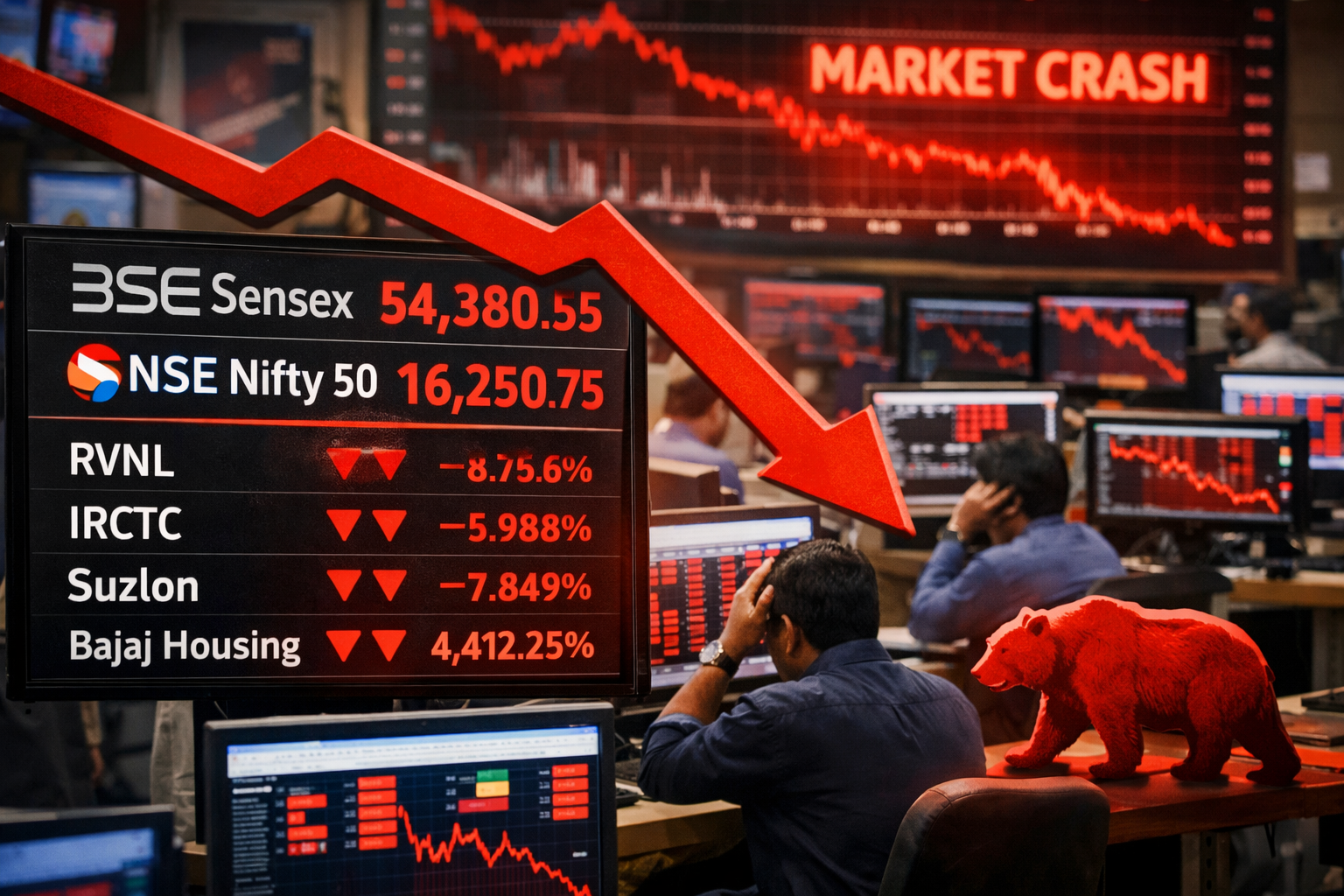
Mumbai, March 2, 2026 – Indian equity markets plunged sharply on Monday as global risk aversion intensified, pushing benchmark indices into the red and dragging dozens of stocks to one-year lows. The BSE Sensex has now lost over 2,000 points over the past three sessions, wiping out more than ₹10 lakh crore in investor wealth, while the NSE Nifty 50 also traded deep in negative territory.
Investors sold off shares broadly amid rising geopolitical tensions in the Middle East, which sparked a surge in crude oil prices and heightened market uncertainty. This risk-off sentiment rippled through the Indian markets, resulting in as many as 869 stocks hitting their 52-week lowest levels on the NSE and BSE.
Among the high-profile names that touched fresh yearly lows were Rail Vikas Nigam Ltd (RVNL), Indian Railway Catering and Tourism Corporation (IRCTC), Suzlon Energy, and Bajaj Housing Finance, highlighting the breadth of the market pain beyond small and mid-cap segments to relatively larger and well-followed counters.
Geopolitical conflict fears — Escalating tensions in the Middle East raised concerns over global economic stability, pushing investors toward safer assets like gold and the US dollar.
Crude oil rebound — Higher crude prices can dampen growth expectations and corporate earnings, leading to risk-selling.
Broad market weakness — Selling pressure extended across sectors, including renewable energy, transportation, and financial services.
What This Means for Investors
Market analysts say that such synchronized falls to 52-week lows often reflect underlying risk aversion rather than company-specific fundamentals. However, some commentators also believe that key support levels may offer long-term value accumulation opportunities for investors with higher risk tolerance — though caution and diversified risk management remain critical in this volatile phase









