Source TOI
ISLAMABAD — In a dramatic pivot from the frontlines of regional tension to the halls of high-stakes diplomacy, Pakistan has emerged as a central backchannel in the escalating conflict between the United States and Iran. Following a pivotal phone conversation between Pakistan’s Army Chief, Field Marshal Asim Munir, and U.S. President Donald Trump on Sunday, Islamabad has officially offered to host peace negotiations that could determine the future of the Middle East.
The “Soldier-Diplomat” and the President
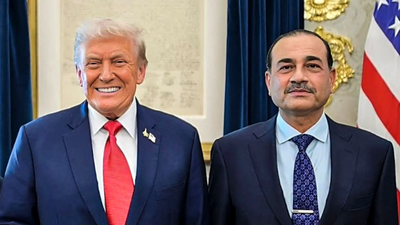
The reported call between General Munir and President Trump marks a significant intensification of Pakistan’s “soldier-diplomatic” outreach. According to diplomatic sources, the discussion focused on a potential “diplomatic off-ramp” as the war enters its fourth week.
Shortly after the call, President Trump announced a five-day suspension of his threat to target Iran’s power infrastructure, citing “very good and productive” conversations. While the White House has not explicitly credited Islamabad, the timing—paired with Pakistani Prime Minister Shehbaz Sharif’s subsequent call to Iranian President Masoud Pezeshkian—suggests a coordinated mediation effort.
Why Pakistan?
Pakistan’s sudden prominence as a mediator is driven by a unique, albeit delicate, set of factors:
The Trump-Munir Rapport: Since 2025, General Munir has developed an uncharacteristically close relationship with Trump, who has frequently praised the General as an “exceptional human being” and a “great fighter.”
Geographic & Sectarian Necessity: Sharing a 900-km border with Iran and housing the world’s second-largest Shia population, Pakistan views a prolonged U.S.-Iran war as an existential threat to its own internal stability.
The Neutrality Card: Unlike many regional players, Pakistan hosts no U.S. military bases, a fact that has shielded it from Iranian retaliatory strikes and allowed it to maintain a “neutral” standing in Tehran’s eyes.
A Three-Way Conduit
Islamabad is not acting alone. Reports indicate a “strategic synergy” between Pakistan, Turkiye, and Egypt, forming a vital conduit to bridge the gap between Washington and Tehran.
“Pakistan stands ready and honored to be the host to facilitate talks,” Prime Minister Shehbaz Sharif posted on X (formerly Twitter) on Tuesday, tagging both President Trump and Iranian leadership.
Proposed venues for the summit include Islamabad, with rumors suggesting U.S. Vice President JD Vance or Middle East envoy Steve Witkoff could lead the American delegation.
The Challenges Ahead
Despite the optimism, the path to a ceasefire is fraught with contradictions. Domestically, General Munir faces criticism from religious groups who accuse the military of being too aligned with Washington. Meanwhile, on the international stage, Iran has officially denied engaging in “direct” talks with the U.S., though they acknowledged receiving messages through “friendly states.”
As Israeli and Iranian forces continue to exchange strikes—including a missile hitting central Tel Aviv this Tuesday—the world watches to see if Islamabad’s backchannel can transform into a formal peace table.