
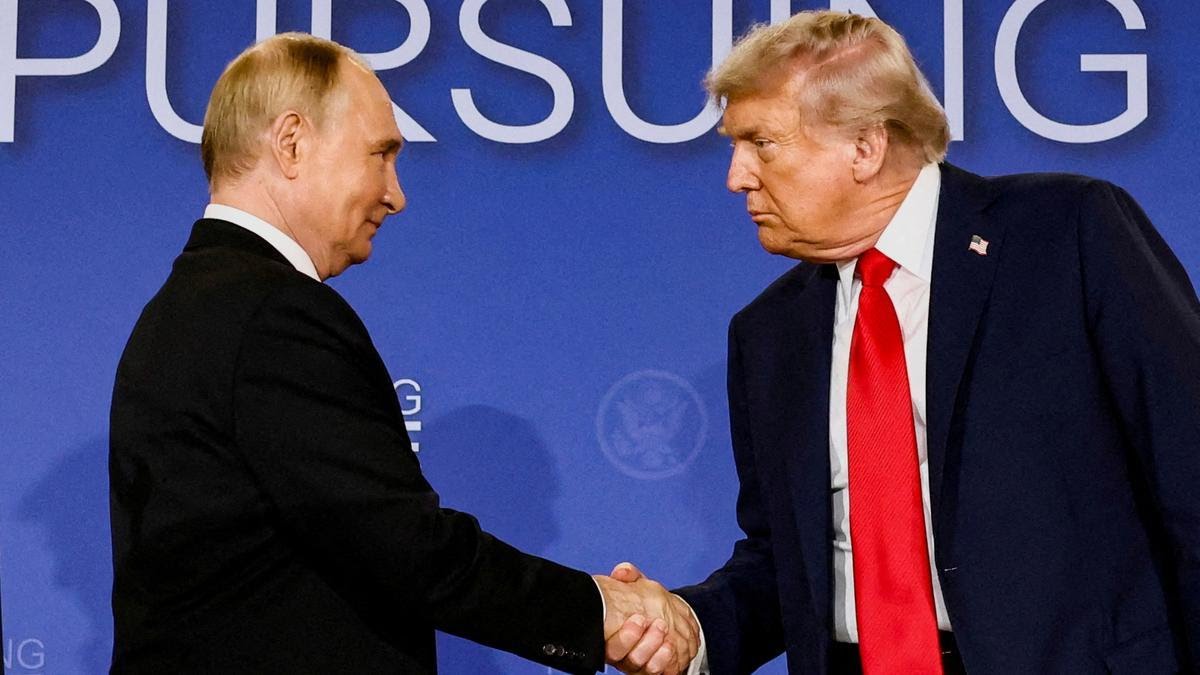
Source The Hindu
Moscow, December 7, 2025 — The Kremlin has welcomed a major shift in the United States’ foreign policy rhetoric after the new U.S. national security strategy dropped language that described Russia as a “direct threat.” Spokesman Dmitry Peskov, speaking to Russian state media, said the change represents a “positive step” and signals a less confrontational approach by Donald Trump’s administration.
According to the newly released 29-page strategy, Washington aims to adopt a stance of “flexible realism,” placing emphasis on pragmatic cooperation and strategic stability rather than adversarial confrontation. The updated document—a shift from earlier U.S. policies that had labelled Russia a major security threat following the 2014 annexation of Crimea and the 2022 full-scale invasion of Ukraine—calls for limited cooperation with Moscow on global security matters.
For Moscow, the change offers a diplomatic opening. Peskov indicated that the Kremlin would now “review the updated strategy in detail” to fully assess its implications. He described the softer tone as markedly different from previous U.S. administrations’ confrontational stances.
However, the revised strategy does not entirely abandon concerns about Russia’s actions in Ukraine. While de-escalating official rhetoric, the U.S. document continues to recognize Moscow’s invasion of Ukraine as a central security concern.
The shift in U.S. policy has already drawn attention across Europe, where many allies had relied on Washington’s firm stance as a deterrent against Russian aggression. Some analysts warn that the softer U.S. language may undermine collective pressure on Moscow, even as Washington frames the move as a bid for renewed strategic stability.
As global watchers pore over the full text of the strategy, all eyes are on whether this marks the beginning of a genuine thaw in U.S.–Russia relations — or simply a recalibration of diplomatic messaging.









