
Source The Hindu
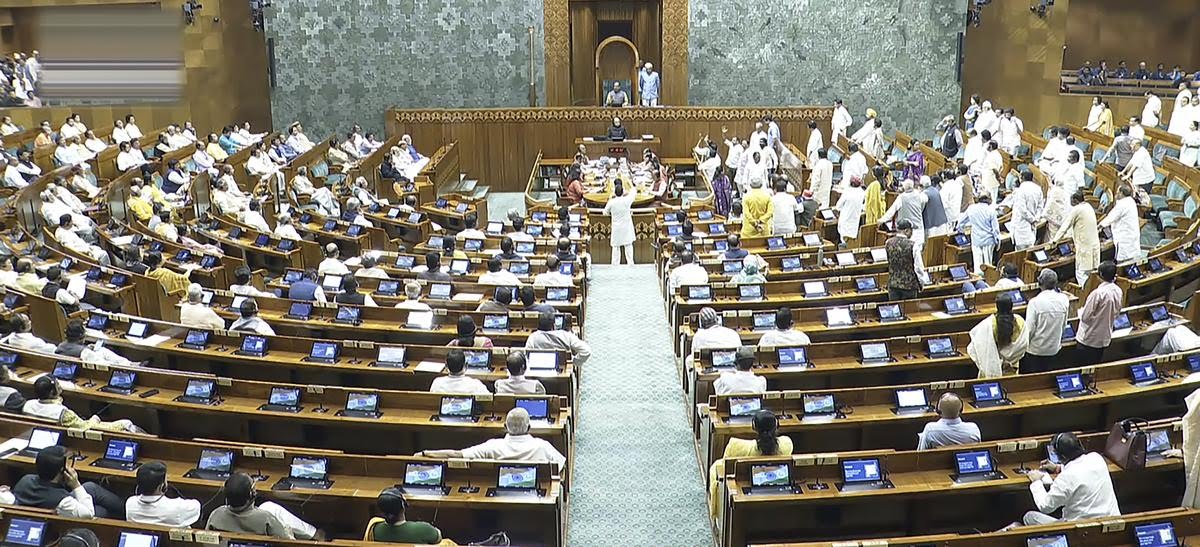
New Delhi: The Lok Sabha, on the fifth day of the Parliament’s Winter Session, passed the crucial ‘Health Security se National Security Cess Bill, 2025’ by a voice vote. The legislation introduces a production-based special cess, primarily on the manufacturing of pan masala and similar goods, to generate dedicated and predictable resources for funding national security initiatives and public health systems across the country.
Key Takeaways of the Bill
The Bill is aimed at augmenting resources for two critical areas: national security and public health, particularly as the existing Goods and Services Tax (GST) compensation cess is set to phase out.
Focus on ‘Demerit Goods’: The cess is specifically levied on the production of pan masala and other notified goods, which the government classifies as ‘demerit goods’ due to the associated significant health risks. Finance Minister Nirmala Sitharaman stated that the cess is not imposed on any essential commodities.
Production-Linked Levy: Unlike the GST, which is consumption-based, this new cess is levied on the production capacity of machines installed in the manufacturing factories or on manual processes undertaken. This measure is intended to bring more manufacturers into the tax net and ensure high taxation on ‘sin goods’ like pan masala.
Varying Cess Rates: The Bill outlines a structured calculation for the cess. For machine-operated units, the monthly cess amount will vary based on the machine’s capacity (measured by the maximum number of pouches packed per minute) and the weight of each pouch. For instance, a machine producing up to 500 pouches a minute (each weighing up to 2.5 grams) would attract a monthly cess of ₹1.01 crore. Factories relying entirely on manual production will face a fixed monthly cess of ₹11 lakh.
Funds Shared with States: The Finance Minister confirmed during the debate that the revenue collected from this cess would be shared with the states for specific public health schemes, acknowledging that public health is a state subject.
Rationale Behind the Move
The government’s move comes in light of the impending end of the GST compensation cess. The new cess, which will be over and above the existing 40 per cent GST rate on pan masala, serves two main objectives:
Maintaining High Tax Incidence: To ensure that the tax burden on pan masala remains high to discourage its use, especially once the GST compensation cess ceases.
Addressing Tax Evasion: As the consumption-based GST often fails to tax many types of pan masala due to production capacity not being linked to the tax, the production-based cess aims to tighten the tax net.
The passage of this Bill follows the Lok Sabha’s approval of the Central Excise (Amendment) Bill, 2025, earlier in the week, which seeks to impose a higher excise duty on tobacco products. Both legislative actions are part of the government’s strategy to repurpose levies on ‘sin goods’ and secure funding for crucial national priorities.









