Source TOI
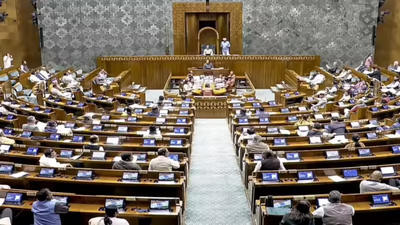
In a significant legislative move, the Lok Sabha on Thursday passed the Viksit Bharat–Guarantee for Rozgar and Ajeevika Mission (Gramin) Bill, 2025, commonly referred to as the VB-G RAM G Bill. The legislation, which seeks to replace the two-decade-old Mahatma Gandhi National Rural Employment Guarantee Act (MGNREGA), was passed amid a massive uproar from the Opposition, leading to the adjournment of the House.
Key Highlights of the VB-G RAM G Bill
The new bill introduces several structural changes to India’s rural employment framework, aiming to align it with the “Viksit Bharat 2047” vision.
Increase in Work Days: The guaranteed wage employment has been increased from 100 days to 125 days per rural household per financial year.
Renaming Controversy: The bill effectively removes Mahatma Gandhi’s name from the scheme, a move that triggered intense protests from the Congress and other Opposition parties.
Funding Pattern: The cost-sharing between the Centre and States is set at 60:40 for most states, while Northeastern and Himalayan states will follow a 90:10 ratio. Union Territories will receive 100% central funding.
Infrastructure Focus: Unlike MGNREGA’s broader scope, the new mission prioritizes four verticals: water security, core rural infrastructure, livelihood assets, and climate resilience works.
Peak Season Pause: To ensure the availability of agricultural labor, public works will be paused for a total of 60 days during peak sowing and harvesting seasons, though the 125-day guarantee remains intact.
Digital Oversight: The bill mandates the use of digital attendance, biometric authentication, and geo-tagging of assets to curb irregularities.
Pandemonium in the House
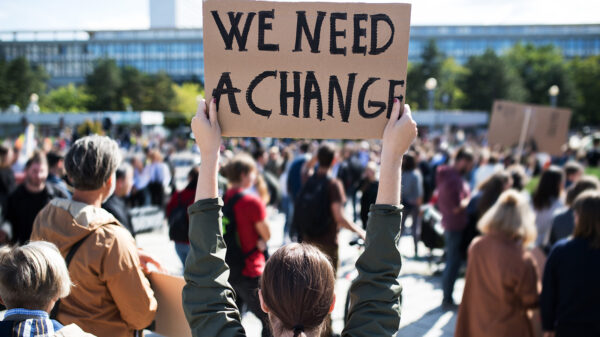
The passage of the bill was anything but smooth. The Opposition, led by senior leaders including Priyanka Gandhi Vadra (making her debut speech in the Lok Sabha) and T.R. Baalu, staged a protest in the Well of the House.
Opposition’s Objections
Removal of Gandhi’s Name: MPs accused the government of an “assault on the philosophical foundation” of the original act by removing the name of Mahatma Gandhi.
Centralization of Power: Opponents argued that the shift from a demand-driven model to “normative funding” would weaken the legal right to work and give the Centre more control over state allocations.
The “Ruckus”: In a dramatic scene, some Opposition members reportedly tore copies of the Bill and threw them toward the Speaker’s Chair, leading to an immediate adjournment of the House for the day.
Government’s Defense
Union Rural Development Minister Shivraj Singh Chouhan defended the bill, calling it a “major upgrade.” He stated that MGNREGA had structural shortcomings and that the new framework would ensure “durable asset creation” rather than just manual labor. He also noted that the name change was part of a broader strategy to modernize national development goals.
What’s Next?
The Bill will now move to the Rajya Sabha for consideration. Given the high stakes and the political sensitivity surrounding the MGNREGA legacy, a heated debate is expected in the Upper House.