
Source news in air
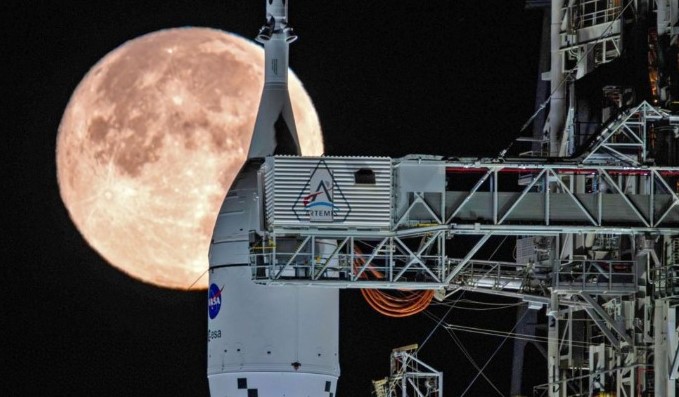
KENNEDY SPACE CENTER, FL — For the first time in over half a century, the countdown to a human lunar journey has an official date. NASA has announced that the highly anticipated Artemis II mission is targeting a launch on March 6, 2026.
The announcement follows a successful “wet dress rehearsal” earlier this week, where engineers successfully loaded the Space Launch System (SLS) rocket with super-cooled liquid hydrogen and oxygen. While previous attempts were plagued by persistent fuel leaks, the latest tests confirmed that recent repairs to the rocket’s seals and filters have held firm.
The Crew and the Journey
The mission will carry a diverse crew of four astronauts who are currently in a mandatory two-week health quarantine to ensure they are flight-ready:
Reid Wiseman (Commander): NASA
Victor Glover (Pilot): NASA
Christina Koch (Mission Specialist): NASA
Jeremy Hansen (Mission Specialist): Canadian Space Agency (CSA)
The 10-day mission will not land on the lunar surface. Instead, the Orion spacecraft will perform a lunar flyby, using a “free-return trajectory.” This path uses the Moon’s gravity to naturally pull the capsule back toward Earth, serving as a critical safety feature. During the trek, the crew will travel approximately 7,600 kilometers (4,700 miles) beyond the far side of the Moon—further than any human has ever traveled into deep space.
A Critical “Flight Test”
Despite the excitement, NASA Administrator Jared Isaacman and mission directors have emphasized that Artemis II is strictly a flight test.
“This is our first time with a crew, the first time with environmental control systems active, and the first time with the flight termination systems ready to support humans,” said Lori Glaze, NASA’s Acting Associate Administrator. “We are going to learn everything we can to prepare for the eventual return to the surface.”
What’s Next?
A formal Flight Readiness Review (FRR) is scheduled for late next week. This final administrative hurdle will evaluate all data from the fueling tests and propulsion systems. If the “Go” is given, the SLS—the world’s most powerful rocket—will ignite at the Kennedy Space Center, marking humanity’s definitive return to the lunar environment and paving the way for the Artemis III landing mission currently slated for 2028.









