
Source HT
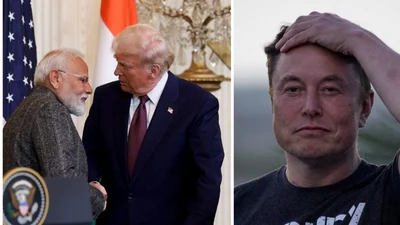
NEW DELHI – The Government of India has officially dismissed a report by The New York Times (NYT) claiming that billionaire entrepreneur Elon Musk joined a high-stakes telephone conversation between Prime Minister Narendra Modi and US President Donald Trump regarding the escalating conflict in West Asia.
In a statement released on Saturday, the Ministry of External Affairs (MEA) clarified that the discussion, which took place on March 24, was strictly a bilateral exchange between the two heads of state.
Official Denial of Third-Party Involvement
The MEA spokesperson addressed the growing speculation sparked by the NYT report, which had cited anonymous US officials claiming Musk’s participation was a sign of his growing influence in the Trump administration’s diplomatic efforts.
“We have seen the story. The telephone conversation on 24 March was between Prime Minister Narendra Modi and President Donald Trump only,” the MEA spokesperson stated. “As has been stated earlier, it provided the opportunity for exchange of views on the situation in West Asia.”
The Indian government emphasized that the call adhered to strict diplomatic protocols, which typically exclude private citizens from sensitive discussions involving national security and global geopolitics.
Focus on the West Asia Crisis
The conversation between Modi and Trump centered on the ongoing volatility in the Middle East and its impact on global stability. Key points of the discussion included:
The Strait of Hormuz: Both leaders underscored the absolute necessity of keeping this vital maritime corridor open and secure. Approximately 40% of India’s crude imports pass through this route, making its accessibility a matter of national energy security.
De-escalation: PM Modi reiterated India’s firm stance on the restoration of peace through dialogue and diplomacy.
Economic Stability: The leaders discussed the ripple effects of the conflict on international energy markets and the global economy.
Context of the Controversy
The NYT report had described Musk’s alleged presence as an “unusual instance of a private citizen joining a discussion involving top leadership during a geopolitical crisis.” While the White House did not explicitly confirm or deny Musk’s presence, Press Secretary Karoline Leavitt described the interaction as “productive,” highlighting the strong personal rapport between Trump and Modi.
The denial from New Delhi comes amid heightened scrutiny over the role of influential private figures in official statecraft. For India, the focus remains on navigating the energy disruptions caused by the West Asia conflict, with PM Modi recently assuring Parliament that despite “unprecedented challenges,” India maintains sufficient reserves of petroleum and coal to weather the crisis.









