
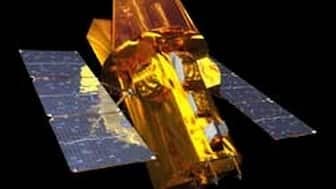
Credit NASA
In a bold and carefully coordinated effort, NASA has initiated a high-priority mission worth approximately ₹283.8 crore ($34 million) to prevent a defunct satellite from crashing uncontrollably back to Earth. The move comes amid growing concerns over space debris and its potential threat to populated regions.
According to officials, the satellite—originally launched years ago for scientific observation—has lost orbital stability and is gradually descending toward Earth’s atmosphere. While most satellites burn up upon re-entry, experts warn that certain components could survive the intense heat and pose risks on the ground.
NASA’s plan involves a combination of trajectory monitoring, atmospheric modeling, and, if necessary, orbital intervention. Scientists are currently tracking the satellite’s path using ground-based radar systems and space surveillance networks. Advanced simulations are also being conducted to predict the exact re-entry window and possible impact zones.
One of the key options under consideration includes deploying a spacecraft to either nudge the satellite into a safer re-entry path or accelerate its descent over an uninhabited region, such as an ocean. However, officials note that such an operation would depend heavily on timing, technical feasibility, and cost efficiency.
Space safety experts have welcomed the initiative, calling it a crucial step toward responsible space management. With thousands of inactive satellites and debris fragments orbiting Earth, incidents like this highlight the increasing urgency for global cooperation on space traffic control.
NASA has reassured the public that the probability of the satellite causing harm remains low, but emphasized that precautionary measures are essential. Updates on the mission’s progress and the satellite’s trajectory are expected to be released in the coming days.
As humanity’s presence in space continues to expand, missions like this underline the importance of proactive strategies to manage risks beyond Earth’s atmosphere.









