Source Deccan Herald
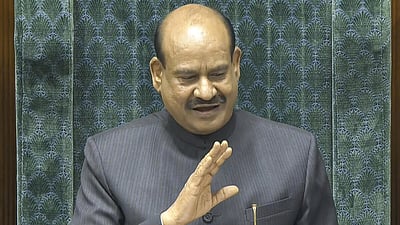
NEW DELHI – In a significant escalation of political tensions, Opposition parties have formally initiated proceedings to remove Lok Sabha Speaker Om Birla, accusing him of “blatantly partisan” conduct. The move has prompted Birla to voluntarily step aside from chairing House proceedings until the matter is constitutionally resolved.
The notice for the no-confidence motion, submitted under Article 94(c) of the Constitution, was delivered to Lok Sabha Secretary General Utpal Kumar Singh on February 10. The motion is expected to be taken up on March 9, coinciding with the commencement of the second phase of the Budget Session.
The Allegations
The notice was spearheaded by senior Congress leaders Gaurav Gogoi, K. Suresh, and Mohamed Jawed, backed by 119 MPs from various parties including the DMK, Samajwadi Party, Left parties, and the RJD. While the Shiv Sena (UBT) and NCP (SP) have extended support, the Trinamool Congress (TMC) has notably refrained from signing the document.
The Opposition’s grievances center on allegations that the Speaker made “false claims” against Congress members and acted with bias during recent debates, specifically regarding the Motion of Thanks on the President’s address.
What the Law Says: The Removal Process
The removal of a Speaker is governed by strict constitutional and parliamentary protocols:
The 14-Day Rule: Under Article 94(c), a notice of at least 14 days is mandatory before the resolution can be moved in the House.
The Voting Threshold: Unlike typical motions that require a majority of those “present and voting,” a resolution to remove the Speaker requires an “absolute majority.” This means more than half of the total membership of the Lok Sabha must vote in favor for the motion to pass.
Recusal of the Speaker: According to Article 96, the Speaker cannot preside over the House while a resolution for their removal is being considered. However, the Speaker maintains the right to speak and participate in the proceedings and can vote in the first instance (though not in the case of a tie).
Admission Requirements: For the motion to be formally “admitted” or granted permission by the House, at least 50 members must stand in their seats to support it when the chair places it before the House.
A Rare Precedent
History suggests that such motions rarely result in removal, primarily because the governing party or coalition typically holds the majority required to defeat them.
Only three Speakers in India’s parliamentary history—G.V. Mavlankar (1954), Hukam Singh (1966), and Balram Jakhar (1987)—have faced similar motions. In all previous instances, the resolutions either failed to gain enough support for admission or were defeated during the vote.
Current Status
With the Lok Sabha currently lacking a Deputy Speaker, the resolution’s language and the subsequent proceedings may be overseen by the senior-most member of the Panel of Chairpersons.
As the House heads into recess, all eyes are now on March 9. While the numbers currently favor the ruling NDA government, the motion marks a historic low in the relationship between the Chair and the Opposition in the 18th Lok Sabha.