Source HT
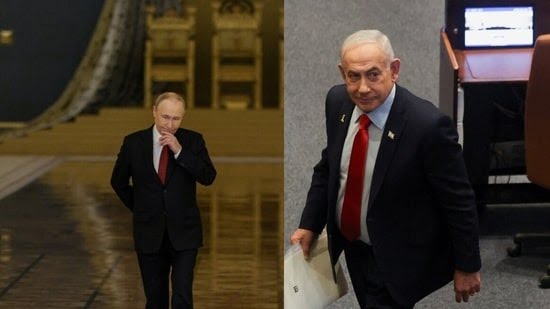
Russian President Vladimir Putin held separate telephone conversations with Israeli Prime Minister Benjamin Netanyahu and Iranian President amid reports of protests targeting Iran’s Supreme Leader Ayatollah Ali Khamenei, underscoring Moscow’s active diplomatic engagement in the Middle East during a period of heightened regional tensions.
According to official statements, Putin first spoke with Netanyahu to discuss the evolving security situation in the region, including developments linked to Iran and their potential impact on stability. The Russian leader emphasized the need to prevent further escalation and reiterated Moscow’s position that dialogue and restraint are essential to avoid a broader conflict.
Shortly after, Putin held talks with the Iranian President, during which the situation inside Iran and the recent protests were discussed. The Russian President conveyed Russia’s support for Iran’s sovereignty and internal stability, while stressing the importance of resolving domestic challenges through lawful and peaceful means. The Iranian side reportedly briefed Putin on the government’s assessment of the protests and accused external forces of attempting to exploit internal unrest.
The back-to-back calls highlight Russia’s balancing act in maintaining ties with both Israel and Iran, two regional rivals with whom Moscow has cultivated working relationships. Russia has ongoing strategic cooperation with Iran, particularly in energy and regional security, while also coordinating closely with Israel on issues related to Syria to avoid military misunderstandings.
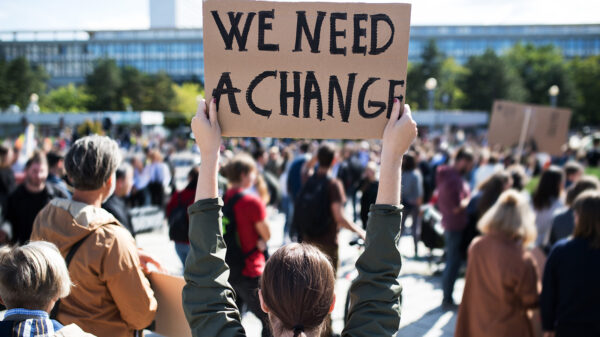
The conversations come at a sensitive moment, as protests critical of Iran’s top leadership have drawn international attention and raised concerns about internal stability in the country. Regional observers note that Russia’s outreach to both Tehran and Tel Aviv reflects its broader effort to position itself as a key diplomatic player capable of engaging all sides amid growing geopolitical uncertainty.
Neither side disclosed detailed outcomes of the calls, but officials indicated that contacts would continue as developments unfold in the region.