
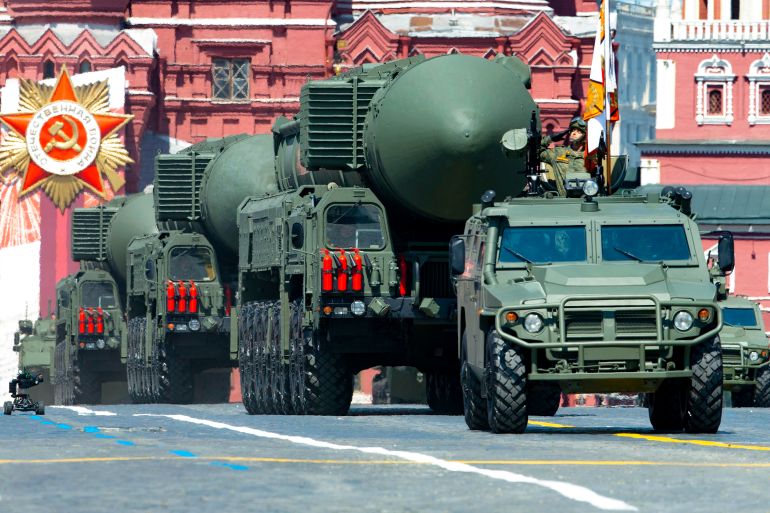
Source Aljajeera
Moscow said it would continue to act responsibly in managing its nuclear arsenal even after the New START nuclear arms control treaty expires, seeking to project stability despite the collapse of one of the last remaining pillars of U.S.-Russia arms control.
The New Strategic Arms Reduction Treaty (New START), which limits the number of deployed strategic nuclear warheads and delivery systems held by the United States and Russia, is set to lapse amid heightened tensions between the two nuclear superpowers. The treaty has long been viewed as a key mechanism for transparency, predictability, and mutual confidence in nuclear relations.
Russian officials said that although the agreement is no longer in force, Moscow does not intend to engage in reckless behavior or escalate the global nuclear standoff. They emphasized that Russia remains committed to avoiding actions that could undermine international security or trigger a new arms race.
At the same time, the Kremlin reiterated that the breakdown of arms control frameworks was largely due to what it described as unfriendly actions by the West. Moscow has repeatedly accused Washington of eroding trust and failing to create conditions necessary for meaningful dialogue on strategic stability.
The United States, for its part, has warned that the expiration of New START could remove critical safeguards, including inspections and data exchanges that helped both sides monitor each other’s nuclear forces. Arms control experts fear that without a replacement agreement, the world could face greater uncertainty and an increased risk of miscalculation.
With no immediate successor treaty in sight, the expiry of New START marks a significant setback for global arms control efforts, raising concerns about the future of nuclear restraint at a time of deep geopolitical rivalry.









