Source HT
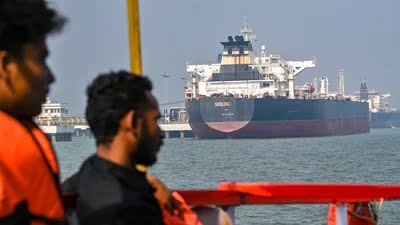
DUBAI / MUMBAI – For seventy-two hours, the digital pulse of the supertanker Shenlong vanished. As the massive vessel approached the world’s most volatile maritime chokepoint, its journey from the Persian Gulf to the Indian coast became a high-stakes waiting game that left maritime monitors and security analysts on edge.
The Shenlong, a Very Large Crude Carrier (VLCC) hauling millions of barrels of oil destined for Indian refineries, reportedly disabled its Automatic Identification System (AIS) just before entering the Strait of Hormuz. In an era of satellite tracking, such “dark” maneuvers are often the first sign of a ship attempting to evade regional tensions—or falling victim to them.
A Gauntlet of Geopolitics
The Strait of Hormuz, a narrow waterway where nearly a fifth of the world’s oil consumption passes daily, has recently seen a spike in “shadow” navigation. For the Shenlong, the decision to go dark wasn’t just a technical glitch; it was a tactical choice born of necessity.
Heightened Security: Recent maritime seizures in the region have pushed insurance premiums to record highs.
Tactical Silence: By turning off transponders, captains hope to minimize the “digital footprint” visible to hostile actors or pirate reconnaissance.
The Indian Connection: As India ramps up its energy imports, its tankers have become frequent travelers through this gauntlet, often requiring covert coordination with naval escorts.
“The Ocean is Too Big for Silence”
The silence sparked immediate concern among cargo owners and maritime security firms. Without an AIS signal, the Shenlong became a ghost on the radar, invisible to standard monitoring tools used to prevent collisions and track scheduled arrivals.
“When a ship of that size stops transmitting in the Strait, the industry holds its breath,” says Marcus Thorne, a maritime security consultant. “You aren’t just worried about technical failure; you’re worried about boarding parties or ‘limpet’ mines. In these waters, silence is rarely golden.”
Safe Harbor
The tension finally broke late last night when the Shenlong’s signal flickered back to life. The vessel emerged into the Arabian Sea, appearing on tracking screens roughly 200 nautical miles off its last known position.
While the crew has not issued an official statement regarding the blackout, the ship is now maintaining a steady course toward the Port of Jamnagar. The “long journey” is nearly over, but the episode serves as a stark reminder of the fragile threads that connect global energy demands to the volatile reality of the high seas.