Source HT
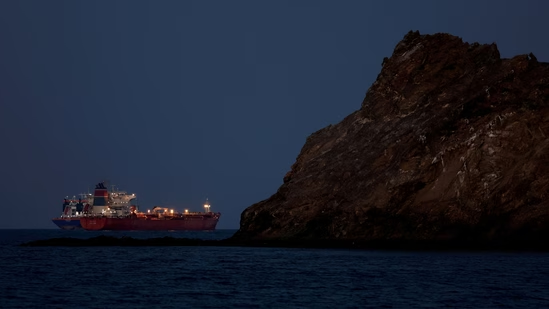
TEHRAN — In a move that has rattled global energy markets, Iran has reportedly announced plans to levy a $1-per-barrel transit fee on oil tankers passing through the strategic Strait of Hormuz. The proposal, first detailed in a Financial Times report on Wednesday, marks an unprecedented effort by Tehran to monetize and monitor one of the world’s most critical maritime chokepoints.
Digital Tolls and Strict Monitoring
According to Hamid Hosseini, spokesperson for Iran’s Oil, Gas, and Petrochemical Products Exporters’ Union, the toll must be paid exclusively in cryptocurrency, such as Bitcoin or stablecoins. This digital payment method is intended to bypass international sanctions, ensuring that the funds cannot be traced or confiscated by foreign financial institutions.
The proposed transit procedure involves several strict steps:
Pre-Notification: Tankers must email Iranian authorities with detailed cargo manifests before attempting passage.
Assessment: Iranian officials will review the cargo to ensure vessels are not being used for unauthorized purposes, such as transferring weapons.
Rapid Payment: Once approved, vessels are reportedly given a window of only a few seconds to complete the crypto transaction.
Exemptions: Empty tankers and vessels not carrying oil are expected to be allowed passage free of charge.
Geopolitical Tensions and the Fragile Ceasefire
The announcement comes at a volatile moment. Despite a current two-week ceasefire between Iran and the United States, the Iranian Revolutionary Guard Corps (IRGC) has maintained a heavy presence in the region. Tehran officials have defended the toll as a necessary security measure to monitor traffic during the truce.
“Iran is not in a rush,” Hosseini told reporters, noting that while the strait is “open,” the new screening procedures will naturally slow the flow of traffic. However, the tone from the military remains stern; radio broadcasts in the Gulf have reportedly warned that any vessel attempting to transit without explicit permission could face military action.
Market Impact and International Response
The Strait of Hormuz is the world’s most important oil artery, with approximately 20% of global oil consumption passing through its waters. Analysts warn that a $1-per-barrel surcharge, while seemingly small, could add millions in costs to global supply chains and set a dangerous precedent for international maritime law.
While Iran claims the right to regulate the waters near its coastline, neighboring nations and international shipping bodies are expected to challenge the legality of the toll. Oman, which shares oversight of the strait, has previously pushed back against similar proposals, citing existing international agreements that guarantee the right of “transit passage” for commercial vessels.
As hundreds of ships wait for clearer signals in the Persian Gulf, the global community remains on high alert, watching to see if this “crypto-toll” becomes a permanent fixture of Middle Eastern energy logistics.