Source Mint
TEHRAN — In a sharp response to recent military threats from the White House, Iranian officials signaled on Sunday that while they are open to nuclear negotiations, any diplomatic progress is strictly contingent on the removal of economic sanctions.
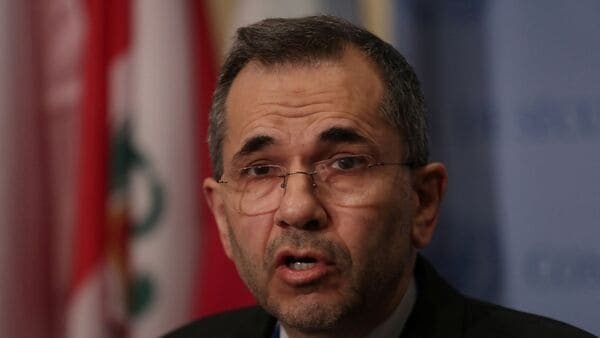
The statement comes after U.S. President Donald Trump warned that the alternative to a deal would be “very traumatic,” a comment widely interpreted as a threat of military action. Tehran’s Deputy Foreign Minister, Majid Takht-Ravanchi, addressed the rhetoric directly, stating that any aggression would cause “everyone to suffer” and that Iran would respond “accordingly” to any existential threat.
The “Sanctions First” Ultimatum
Speaking in an interview with the BBC, Takht-Ravanchi emphasized that the “ball is in America’s court.” Iran’s current stance remains firm: the nuclear file can be reopened, but only if the U.S. is willing to dismantle the “maximum pressure” economic framework.
Reciprocity: “One cannot accept the notion that Iran has to do certain things without the other side committing itself to do their share,” Takht-Ravanchi said.
Scope of Talks: Tehran remains adamant that negotiations will be limited strictly to the nuclear program, explicitly ruling out discussions regarding its ballistic missile arsenal or regional proxy networks.
Enrichment Levels: Iranian officials have floated a potential compromise to dilute their stockpile of 60% enriched uranium back to 20%, but they have declared “zero enrichment” a non-starter and a “red line.”
Rising Regional Tensions
The diplomatic maneuvering is unfolding against a backdrop of significant military posturing. The U.S. has recently moved a second aircraft carrier, the USS Gerald R. Ford, into the Arabian Sea to join a massive naval presence.
Meanwhile, Iranian military leaders have dismissed the U.S. warnings as “reckless.” Major General Abdolrahim Mousavi, Chairman of the Chief of Staff of Iran’s Armed Forces, stated on Sunday that a conflict with the Islamic Republic would provide an “unforgettable lesson” for the U.S. administration.
What’s Next: The Geneva Round
Despite the war of words, both sides are preparing for a second round of indirect talks scheduled for Tuesday, February 17, in Geneva. Omani representatives will continue to serve as mediators, following an initial round of discussions in Muscat earlier this month that both sides described as “positive” yet preliminary.
“If they are sincere, I’m sure we will be on the road to an agreement,” Takht-Ravanchi noted, though he cautioned that one meeting is not enough to prove the U.S. is serious about a peaceful resolution.