Source HT
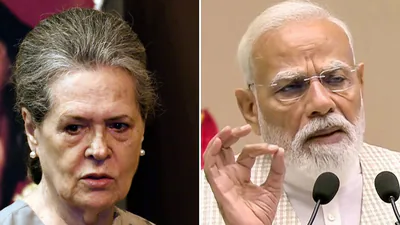
The long-awaited passage of the Women’s Reservation Bill has shifted the political battlefield from a “yes or no” debate to a complex technical tug-of-war. While the move to reserve 33% of seats in the Lok Sabha and state assemblies for women was met with historic bipartisan support, Congress leader Sonia Gandhi and Prime Minister Narendra Modi remain at odds over the “when” and “how.”
At the heart of the friction lies delimitation—the process of redrawing electoral boundaries—and its connection to the next national census.
The Crux of the Controversy
While the Modi government hails the bill as a landmark for “Nari Shakti” (women’s power), the opposition, led by Sonia Gandhi, argues that the implementation timeline is a “delay tactic.” Under the current law, the reservation will only kick in after:
A new Census is conducted.
Delimitation is carried out based on that census data.
Sonia Gandhi’s stance is clear: “Women’s quota is fine, but the issue is delimitation.” She, along with several opposition leaders, demands immediate implementation, arguing that waiting for a census and the redrawing of seats could push the actual rollout to 2029 or beyond.
Understanding Lok Sabha Expansion
Delimitation isn’t just about moving lines on a map; it’s about the total number of seats in Parliament. Since 1976, the number of Lok Sabha seats has been frozen at 543 to ensure states that successfully controlled population growth weren’t “punished” with fewer representatives.
However, that freeze is set to expire. The upcoming delimitation is expected to result in a significant expansion of the Lok Sabha:
Feature Current Status Projected Post-Delimitation
Total Seats 543 800+ (Estimated)
Basis of Seats 1971 Census Most Recent Census (Post-2021)
Women’s Quota ~15% (Current) 33% (Fixed)
The Math of Power: If the Lok Sabha expands to 848 seats, for instance, women would be guaranteed at least 280 seats, compared to the 82 they currently hold.
The “North-South” Divide
The reason the Prime Minister’s “delimitation-first” approach is so contentious is the demographic disparity between Indian states.
Northern States: Have seen higher population growth; their seat share would skyrocket.
Southern States: Have been more effective at population control; they fear their political influence will shrink relative to the North.
By linking women’s reservation to delimitation, the government ensures that the increased number of seats for women happens within a larger, reorganized Parliament. The opposition, however, views this as an unnecessary hurdle that holds women’s representation hostage to a complicated and politically sensitive demographic exercise.
What Lies Ahead?
PM Modi has framed the bill as a “guarantee” of dignity and participation. Yet, as the dust settles on the legislative victory, the focus remains on the New Delhi bureaucratic machinery.
The question is no longer whether India wants women in the House, but whether the house needs to be rebuilt entirely before they are allowed to take their seats. Until the Census is conducted and the boundaries are redrawn, the 33% remains a promise on paper rather than a reality at the polls.