
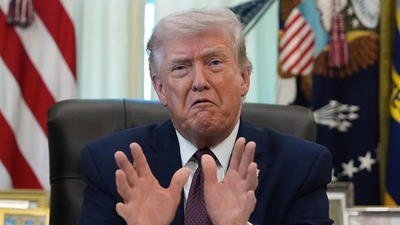
Source TOI
Washington D.C.: Former U.S. President Donald Trump is facing growing scrutiny following what analysts describe as a flawed handling of a recent Iran-related crisis, with critics drawing parallels to past geopolitical flashpoints such as Bagram Airfield and the Benghazi attack.
The controversy stems from decisions and rhetoric surrounding escalating tensions with Iran, which observers say exposed gaps in crisis management and strategic planning. The situation has reignited debate over U.S. foreign policy, particularly regarding military intervention and intelligence assessments.
Political commentators note that comparisons to Bagram and Benghazi are not incidental. The withdrawal from Bagram in 2021—widely viewed as chaotic—remains a sensitive issue in American politics, with Trump himself repeatedly criticizing the decision and even proposing regaining control of the base. � At the same time, the Benghazi attack continues to serve as a benchmark for evaluating U.S. responses to overseas crises.
In the current scenario, critics argue that Trump’s approach to Iran reflects a pattern of high-stakes decision-making without sufficient groundwork, raising concerns about potential unintended consequences. The unfolding developments have also sparked fresh discussions about accountability and the role of leadership during international emergencies.
Supporters of Trump, however, defend his stance as assertive and necessary in dealing with adversarial regimes, insisting that strong responses are essential to maintaining U.S. global influence.
As tensions in the Middle East continue to evolve, the episode underscores the enduring complexity of U.S. foreign policy, where past precedents like Bagram and Benghazi continue to shape public perception and political narratives.









