Source HT
Rising tensions between the United States and Iran intensified on Thursday after former U.S. President Donald Trump warned that Tehran “cannot continue to threaten the stability” of the Middle East and must agree to a new deal or face serious consequences.
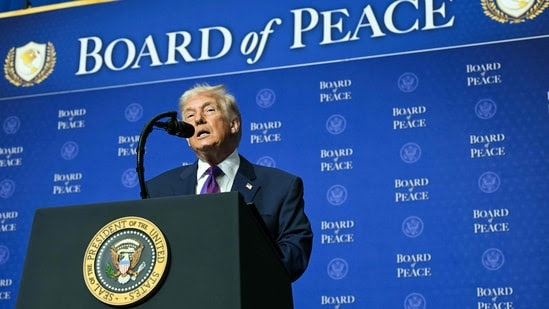
Speaking at a policy meeting in Washington, Trump said negotiations were ongoing but stressed that a “meaningful agreement” was necessary, particularly regarding Iran’s nuclear programme. He suggested that failure to reach an understanding could lead to military action within days.
Nuclear Deal Pressure Mounts
Washington has been pushing Tehran to curb uranium enrichment and limit military activities in the region. Trump reiterated that Iran must not acquire nuclear weapons, describing it as a threat to regional peace.
Diplomatic contacts between the two sides have taken place in Geneva but have so far failed to produce a breakthrough.
Meanwhile, the U.S. has significantly strengthened its military presence in the Middle East, deploying aircraft carriers, advanced fighter jets and additional troops as pressure tactics.
Iran Signals Defiance
Iranian leaders have responded cautiously but firmly. Supreme Leader Ali Khamenei previously warned that any attack could spark a wider regional conflict, while officials insisted the country’s nuclear programme is for civilian purposes.
Tehran has also conducted naval drills in the strategically vital Strait of Hormuz, signalling readiness to counter any military move.
Fears of Wider Conflict
Analysts say the situation is among the most dangerous confrontations between Washington and Tehran in recent years. With both sides issuing threats and military deployments increasing, diplomats fear miscalculation could push the region toward open conflict.
For now, global attention remains fixed on whether diplomacy can avert another Middle East war — or whether the standoff will escalate further in the coming days.