
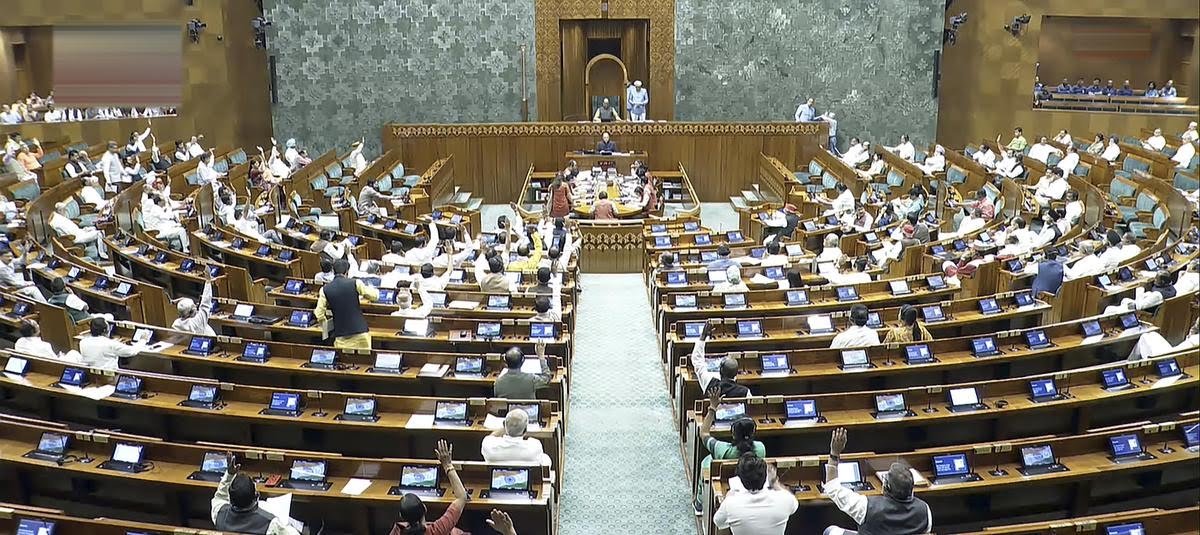
Source The Hindu
NEW DELHI — In a major push to operationalize the long-awaited women’s reservation before the next general elections, Prime Minister Narendra Modi has reached out to floor leaders of all political parties, urging them to pass the proposed amendments to the Nari Shakti Vandan Adhiniyam in “one voice.”
Writing to leaders across both Houses of Parliament on Saturday, the Prime Minister emphasized that the empowerment of women transcends partisan politics. The outreach comes ahead of a special three-day parliamentary sitting convened from April 16 to 18, 2026, specifically to discuss and clear the legislative hurdles currently delaying the 33% quota.
Delinking the Quota from the 2027 Census
The primary objective of the new amendments—which include the Constitution (131st Amendment) Bill—is to accelerate the implementation timeline. Under the original 2023 Act, the reservation was tied to a delimitation exercise following the first census conducted after the law’s passage. With the census scheduled for 2027, the quota likely would not have taken effect until 2034.
The government now proposes to de-link the reservation from the 2027 Census, opting instead to conduct delimitation based on 2011 Census data. This shift would ensure that the 33% reservation is active for the 2029 Lok Sabha elections and concurrent state assembly polls.
A Historic Expansion of Parliament
If the amendments are passed, the landscape of Indian democracy will undergo a significant transformation:
Increased Seat Count: The number of seats in the Lok Sabha is projected to rise from 543 to 816.
Guaranteed Representation: Of these, 273 seats will be reserved exclusively for women.
Vertical Reservation: The quota will apply vertically, ensuring representation for women within Scheduled Caste (SC) and Scheduled Tribe (ST) categories.
Union Territories: New legislation will also extend these provisions to UTs with legislative assemblies, including Delhi, Puducherry, and Jammu & Kashmir.
“Above Party or Individual”
In his letter, PM Modi described the moment as a “civilizational commitment,” asserting that a society only progresses when its women are in decision-making roles.
“This is a moment above any one party or individual. It is a moment to demonstrate responsibility towards women and our future generations,” the Prime Minister wrote.
Opposition Seeks Deeper Dialogue
While the government is pushing for a swift, unanimous passage, the Opposition has voiced concerns regarding the lack of prior consultation. Congress President Mallikarjun Kharge responded by questioning the timing of the amendments and urged the government to convene an all-party meeting after the current round of state elections concludes on April 29.
Despite the friction, the government remains confident. The special session starting Thursday will be a litmus test for parliamentary unity, as the nation watches to see if the “aspiration of 140 crore Indians” finally becomes a reality on the ballot paper by 2029.









