Source The Hindu
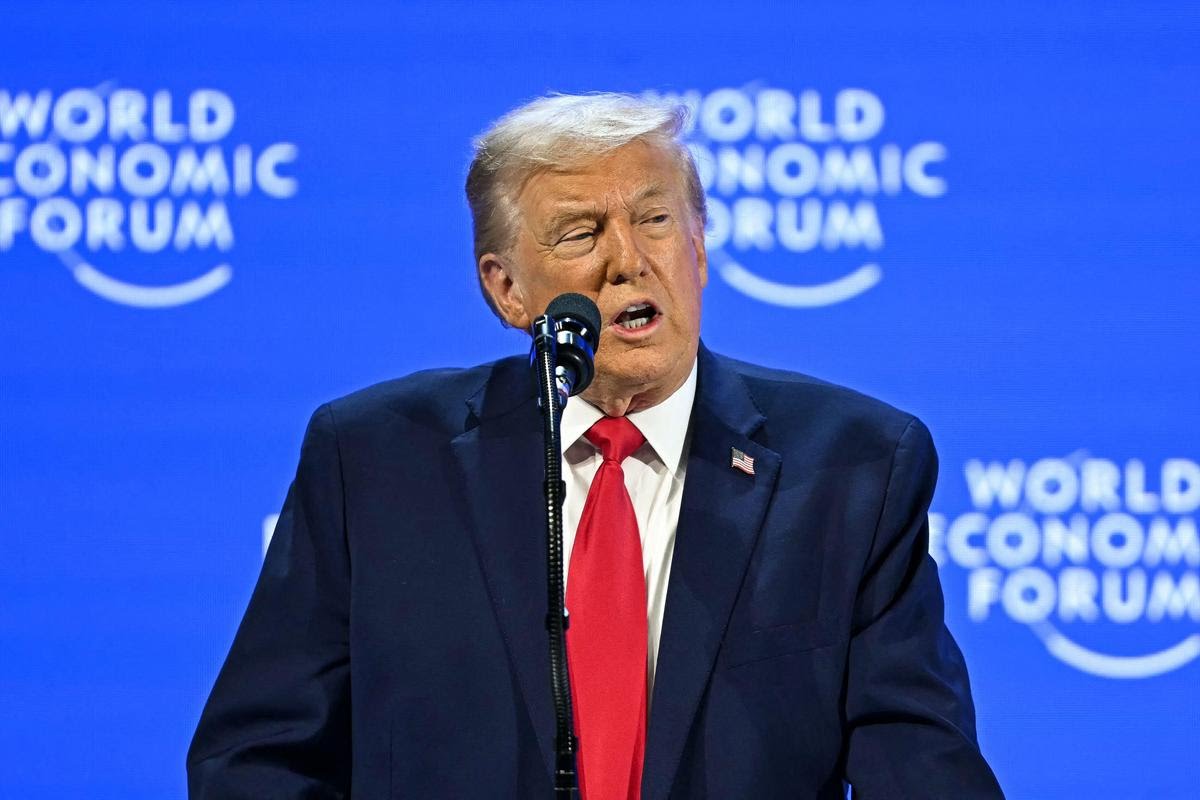
DAVOS, Switzerland — In a high-stakes address at the 2026 World Economic Forum in Davos on Wednesday, U.S. President Donald Trump delivered a combative speech sharply criticizing Europe’s political and economic direction, underscoring rising tensions between Washington and its long-standing allies.
Trump declared that Europe was “not heading in the right direction” in terms of economic, energy, and immigration policies, while touting what he described as record American economic growth and low inflation under his administration’s policies.
The address to world leaders, CEOs, and policymakers — the centerpiece event of the elite annual gathering in the Swiss Alps — was notable not just for its rhetoric but for its tone. Trump warned against Europe’s current path and positioned the United States as a model of success with a bold “America First” stance.
Tensions Over Greenland and Transatlantic Relations
A central flashpoint of the forum has been Trump’s controversial push to acquire Greenland, a semi-autonomous territory of Denmark. The U.S. president reaffirmed there was “no going back” on his goal to secure Greenland — a stance that has drawn sharp rebukes from European capitals and NATO allies alike.
Earlier this week, Trump announced threatened tariffs on several European nations unless a deal over Greenland is reached, further straining diplomatic ties. European leaders and officials have criticized these moves as aggressive and contrary to long-established rules of diplomacy.
European Commission President Ursula von der Leyen and other EU figures have emphasized that the future of Greenland should be determined by its people alone, rejecting external pressure. Germany’s chancellor has signaled willingness to engage but warned that unreasonable tariffs would be met with countermeasures.
Broad Reactions at the Forum
Trump’s remarks sparked a mixture of alarm and resistance among other leaders at Davos. European officials used the forum’s platform to push back against what they view as a shift toward unilateralism and disregard for international norms. French President Emmanuel Macron, without naming Trump directly, decried a “lawless world” emerging if nations abandon commitments to global rules and cooperation.
U.S. officials such as Treasury Secretary Scott Bessent and Commerce Secretary Howard Lutnick have doubled down on optimistic U.S. economic forecasts, though they also caution that trade frictions with the EU could spill into tit-for-tat escalation without careful management.
The Forum’s Broader Agenda
While Trump’s speech dominated headlines, other discussions at the 56th annual WEF have continued on themes like artificial intelligence, geopolitical risk, and global inequality. However, the unnervingly sharp exchanges between the U.S. and Europe have underscored how geopolitical fault lines have come to overshadow economic dialogue at the gathering.
As Davos continues through the end of the week, delegates and world leaders will be watching closely to see whether this hours-long confrontation over policy direction and alliances translates into diplomatic breakthroughs — or a deeper rift in transatlantic relations