
Source HT
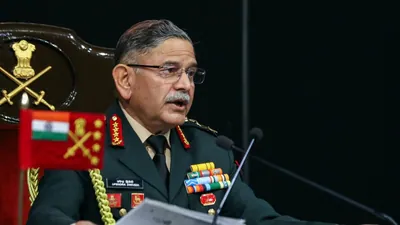
New Delhi: Indian Army Chief General Upendra Dwivedi has shed light on the factors that, according to Indian military assessments, compelled Pakistan to seek a ceasefire during Operation Sindoor, identifying two critical turning points that decisively shifted the balance in India’s favour.
Speaking at a strategic affairs event in New Delhi, General Dwivedi said Operation Sindoor was not defined by a single battle but by a sequence of calibrated military, diplomatic and technological moves that steadily eroded Pakistan’s operational options.
First Turning Point: Loss of Strategic Initiative
The first major turning point, the Army Chief said, came when Indian forces successfully neutralised key forward command-and-control nodes and disrupted Pakistan’s ability to coordinate along multiple sectors. According to General Dwivedi, this early phase of the operation denied Pakistan the strategic initiative it had hoped to maintain.
“Once their command-and-control architecture came under sustained pressure, their response became reactive rather than proactive,” he said, adding that precision strikes and rapid mobilisation played a crucial role in shaping the battlefield.
Military officials indicated that India’s integrated use of intelligence, surveillance and real-time targeting significantly reduced the scope for escalation while keeping pressure firmly on adversary positions.
Second Turning Point: Diplomatic and Economic Pressure
The second turning point, General Dwivedi noted, emerged outside the battlefield. As Operation Sindoor progressed, intensifying diplomatic isolation and economic stress began to weigh heavily on Pakistan’s leadership.
India’s engagement with key global powers, coupled with international concerns over regional stability, narrowed Pakistan’s diplomatic space. At the same time, sustained military readiness along the borders forced Islamabad to divert resources at a time when its economy was already under strain.
“This convergence of military dominance and diplomatic pressure made continuation of hostilities untenable for them,” the Army Chief said.
A Calibrated Approach
General Dwivedi emphasised that Operation Sindoor was designed as a limited, objective-driven operation, aimed at restoring deterrence rather than pursuing prolonged conflict. He stressed that India’s approach remained measured, avoiding civilian targets and keeping escalation under strict control.
Defence analysts say the remarks underline India’s evolving doctrine of combining hard military power with diplomatic leverage, signalling that future conflicts will likely be shaped as much by international positioning as by battlefield outcomes.
Pakistan has not officially accepted India’s characterisation of events surrounding Operation Sindoor. However, the Indian Army maintains that the operation reinforced deterrence and demonstrated New Delhi’s readiness to protect its national security interests.
As regional dynamics continue to evolve, General Dwivedi’s comments offer a rare insight into how India’s military leadership views the intersection of force, strategy and diplomacy in modern conflict.









