
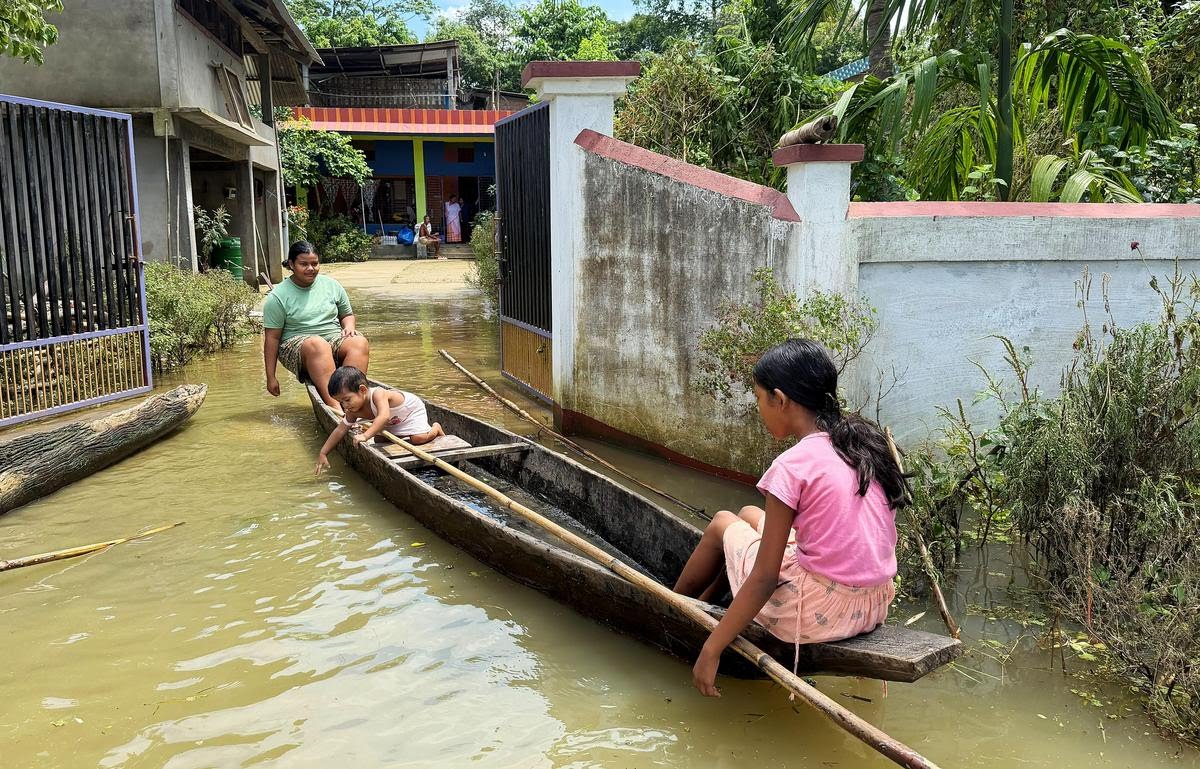
Source The Hindu
SIVASAGAR, ASSAM — In the wake of devastating floods that swept through large parts of Assam, survivors in Sivasagar are recounting chilling tales of survival while bracing for a difficult and prolonged recovery. The floods, triggered by relentless monsoon rains and swelling rivers, have displaced thousands, destroyed homes, and disrupted livelihoods across the district.
Residents of Sivasagar describe the night the waters rose as sudden and unforgiving. “It happened so fast,” said Ranjit Gogoi, a local farmer. “By the time we realized the water was entering our house, it was already knee-deep. We had to leave everything behind and run.”
Many families fled with little more than the clothes on their backs, seeking refuge on higher ground, in relief camps, or along embankments. Elderly residents and children were among the most vulnerable, with several requiring urgent medical attention during evacuation.
Local authorities and disaster response teams, including personnel from the State Disaster Response Force (SDRF), worked tirelessly to rescue stranded individuals. Boats became lifelines as entire neighborhoods were submerged, and communication lines were cut off in several areas.
Despite the immediate rescue efforts, the aftermath has revealed the full scale of destruction. Homes built with mud and bamboo have been washed away, agricultural fields lie inundated, and stored food supplies have been ruined. For many, the floods have erased years of hard-earned progress overnight.
Relief camps have been set up across Sivasagar, providing temporary shelter, food, and basic medical care. However, overcrowding and limited sanitation facilities pose additional challenges. “We are safe for now, but living conditions are very difficult,” said Anita Das, a mother of two staying in a relief camp. “We don’t know when we can go back or what we will find when we return.”
Health concerns are also mounting, with fears of waterborne diseases such as cholera and diarrhea. Medical teams have been deployed to monitor the situation, but access to clean drinking water remains a critical issue in several affected areas.
The economic impact of the floods is expected to be severe. Sivasagar, known for its agriculture and tea plantations, has suffered significant crop damage. Farmers worry about lost income and the inability to prepare for the next planting season. Small businesses have also taken a hit, with shops and local markets submerged for days.
State government officials have announced compensation packages and rehabilitation plans, but implementation on the ground will take time. Experts emphasize the need for long-term flood management strategies, including better drainage systems, stronger embankments, and early warning mechanisms.
Climate experts warn that such extreme weather events are becoming more frequent due to changing climate patterns, making regions like Assam increasingly vulnerable. The Brahmaputra River and its tributaries, which flow through the state, are prone to overflowing during intense monsoon spells.
For now, the focus remains on survival and rebuilding. Community solidarity has emerged as a beacon of hope, with neighbors helping each other salvage belongings, rebuild huts, and share resources.
“We have lost a lot, but we are still alive,” said Gogoi. “That gives us strength to start again.”
As floodwaters gradually recede, the people of Sivasagar face the daunting task of rebuilding their lives—one step at a time.









