Source Reuter
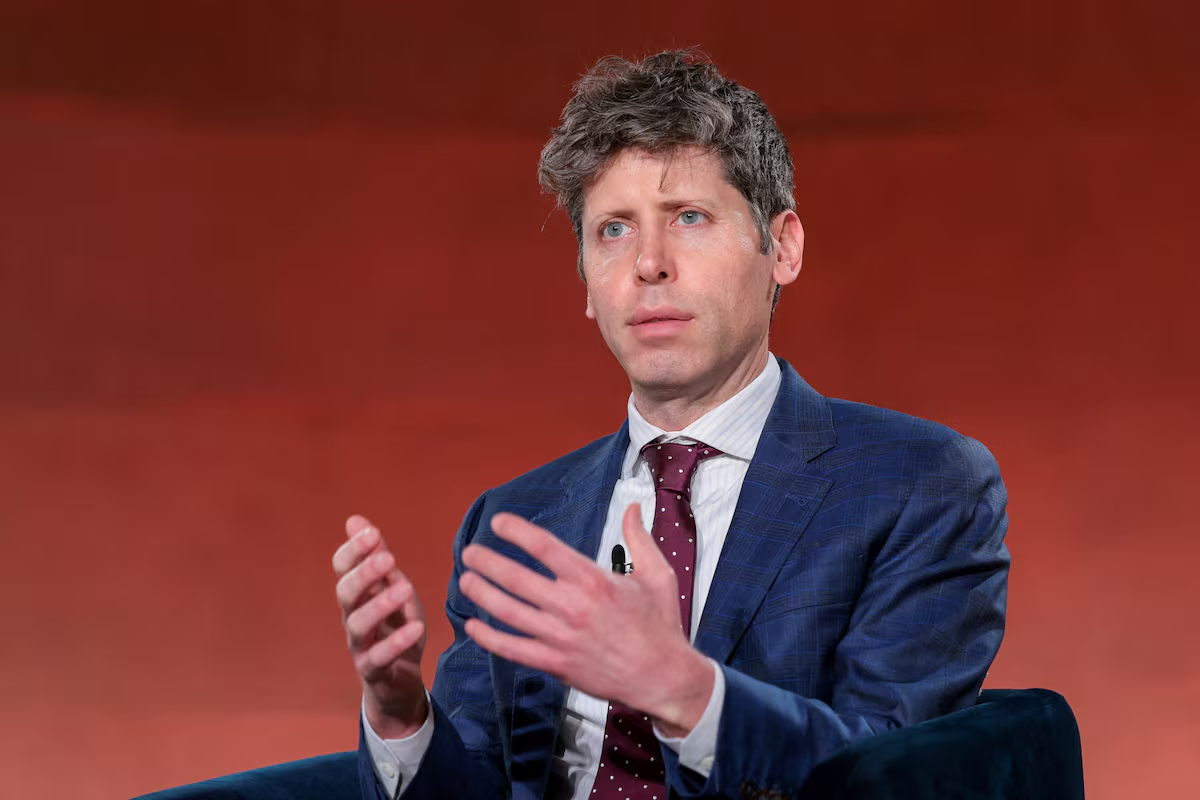
In a measured assessment of the future of work, Sam Altman, the CEO of OpenAI, has said that artificial intelligence is unlikely to trigger a widespread “jobs apocalypse,” countering growing fears about mass unemployment due to rapid technological advancements.
Speaking at a recent public forum, Altman acknowledged that AI will significantly transform the nature of jobs across industries. However, he emphasized that history shows technology tends to create new categories of work even as it disrupts existing roles. According to him, while certain repetitive and routine tasks may be automated, entirely new opportunities will emerge that require human creativity, judgment, and oversight.
Altman noted that the transition may not be smooth for everyone. Some sectors could experience short-term disruption, especially where tasks are highly automatable. He stressed the importance of governments and institutions preparing for this shift by investing in education, skill development, and social safety nets to help workers adapt.
He also pointed out that AI tools are increasingly being used to augment human capabilities rather than replace them. From assisting programmers in writing code to helping doctors analyze medical data, AI is becoming a collaborative partner in many professions.
Despite optimism about long-term outcomes, Altman warned against complacency. He called for responsible development and deployment of AI technologies, along with thoughtful regulation, to ensure that the benefits are widely shared and risks are minimized.
As AI continues to evolve at a rapid pace, the debate over its impact on employment remains active. However, Altman’s remarks add to a growing perspective within the tech industry that while jobs will change, the future of work will likely be defined more by adaptation than by elimination.