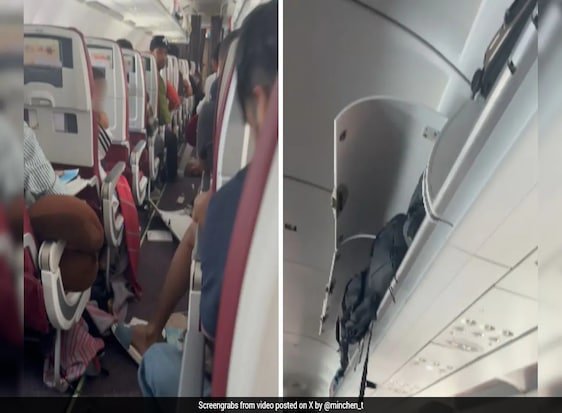
Source NDTV
NEW DELHI — Air India has officially terminated the employment of the pilot-in-command of a Phuket-Delhi flight after a post-flight medical examination confirmed the presence of a psychoactive substance. The dismissal, announced on Friday, comes in the wake of a harrowing mid-air incident in August that left two dozen passengers and crew injured.
The disciplinary action follows preliminary findings released by the Aircraft Accident Investigation Bureau (AAIB) regarding Air India flight AI-2379. On August 4, the Airbus A320 carrying 145 people was cruising at 36,000 feet when it experienced a near-simultaneous loss of pressure across all three of its hydraulic systems. This technical malfunction triggered the disconnection of the autopilot and a brief stall warning. The aircraft violently lost nearly 300 feet of altitude while the seat-belt sign was off, causing severe cabin damage and resulting in injuries to 20 passengers and four cabin crew members. Four of the injured required hospitalization upon landing at Delhi’s Indira Gandhi International Airport.
Following the emergency, both pilots were subjected to routine medical checks. While their breathalyzer tests cleared them for alcohol consumption, the pilot-in-command tested non-negative for a psychoactive substance. A subsequent confirmatory blood test verified the presence of the drug, whereas the co-pilot’s results returned negative.
The AAIB highlighted the pilot’s drug use as a matter of “serious concern,” urging the Directorate General of Civil Aviation (DGCA) to take prioritized action to prevent substance abuse in the aviation sector.
In response, an Air India spokesperson reiterated the airline’s strict adherence to safety protocols. “In line with Air India’s zero-tolerance approach to violations of safety, fitness, or regulatory requirements, the pilot’s employment has been terminated with immediate effect,” the airline stated. As a further precaution, the Tata Group-owned carrier has initiated voluntary drug testing for 100% of its pilots to reinforce its safety-first operational culture.
While the AAIB report confirmed the drug violation, it noted that the preliminary investigation has not yet established a direct link between the pilot’s substance use and the hydraulic failure that caused the altitude upset. A detailed probe into the mechanical and technical aspects of the flight remains ongoing.