Source Aljajeera
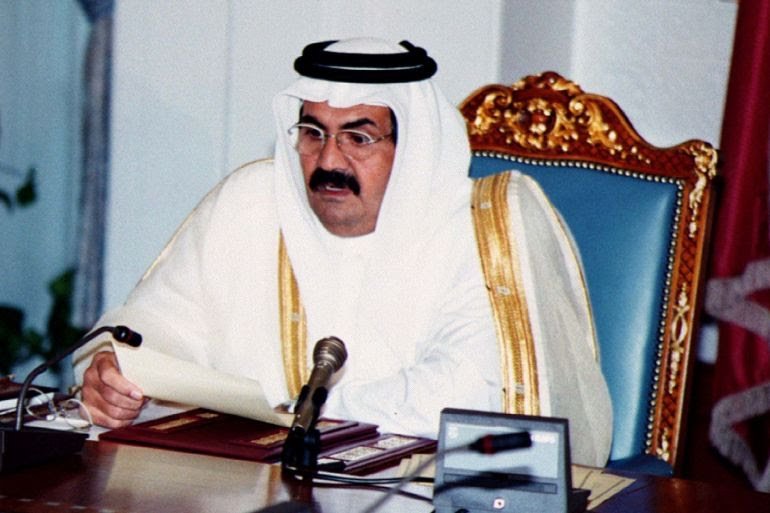
DOHA — Few modern leaders have fundamentally reshaped a nation’s trajectory as dramatically as Sheikh Hamad bin Khalifa Al Thani. Known globally as the “Father Emir,” his nearly two-decade rule transformed Qatar from a quiet Gulf state into a hyper-wealthy, globally influential economic powerhouse and diplomatic heavy hitter.
From bold economic gambles to pioneering media ventures, Sheikh Hamad’s reign defined a new era for the Middle East. Here is a look back at the defining moments that shaped his life and legacy.
1971–1977: Military Foundations and Ascendancy
Before stepping into political leadership, Sheikh Hamad laid his foundations in the military. He graduated from the prestigious Royal Military Academy Sandhurst in the United Kingdom in 1971. Upon returning to Qatar, he was appointed commander-in-chief of the nation’s armed forces.
His formal path to succession was cemented in 1977 when he was named Crown Prince and Minister of Defense, positions he used to modernize Qatar’s military infrastructure.
1995: A Dramatic Political Shift
The ultimate turning point in modern Qatari history occurred on June 27, 1995. In a bloodless palace coup, Sheikh Hamad seized power from his father, Sheikh Khalifa bin Hamad Al Thani, who was staying in Switzerland at the time.
Backed fully by the ruling family and military, the new Emir immediately set out to execute a vastly different vision for the country—one focused on rapid modernization, global integration, and heavy domestic investment.
1996: The Launch of Al Jazeera
Seeking to project Qatari influence outward and shake up the heavily controlled Arab media landscape, Sheikh Hamad provided the seed funding of $137 million to launch the Al Jazeera satellite news network in 1996.
By offering a platform for hot-button political debate and regional dissent, the network quickly became one of the most widely watched—and fiercely controversial—news outlets in the world, establishing Doha as a media epicenter.
The Liquefied Natural Gas (LNG) Boom
Perhaps Sheikh Hamad’s most enduring legacy is the monumental gamble he took on Liquefied Natural Gas (LNG). While his predecessors were hesitant to invest heavily in gas due to low global demand, Sheikh Hamad partnered with international energy firms to tap into the massive North Field—the largest non-associated natural gas field in the world.
The investment paid off extraordinarily. By the mid-2000s, Qatar became the world’s largest exporter of LNG, catapulting its small population to the top of global GDP-per-capita rankings and fueling the rapid, futuristic construction of the Doha skyline.
2005: Sovereign Wealth Expansion
To ensure Qatar’s immense wealth would outlast its fossil fuels, Sheikh Hamad established the Qatar Investment Authority (QIA) in 2005.
Under his guidance, the sovereign wealth fund began acquiring prime global assets, including iconic London properties like the Shard and Harrods, vast stakes in Volkswagen, Barclays, and prestigious international art collections.
2010: The Historic World Cup Bid
On December 2, 2010, Sheikh Hamad’s long-term strategy to put Qatar on the sporting map achieved its crowning glory. FIFA awarded Qatar the hosting rights for the 2022 World Cup.
The successful bid, championed heavily by the Emir alongside his wife, Sheikha Moza bint Nasser, marked the first time a Middle Eastern nation won the rights to host the world’s biggest sporting event, initiating a massive multi-billion-dollar infrastructure overhaul.