
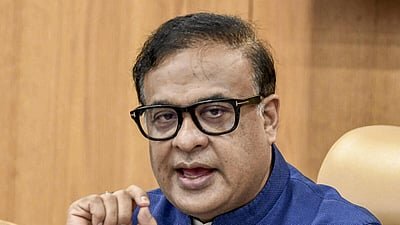
Source Deccan Herald
The Assam government has announced a stringent policy targeting the practice of polygamy, declaring that individuals engaging in multiple marriages will be denied access to government welfare schemes and could face dismissal from public sector jobs. The move marks a significant step in the state’s broader efforts to enforce social reforms and ensure adherence to legal and ethical standards in public life.
Chief Minister Himanta Biswa Sarma stated that the decision is aimed at discouraging polygamy and promoting gender equality. According to officials, the policy will apply particularly to government employees, who are expected to uphold the law and serve as role models in society. Any violation involving multiple marriages without legal sanction may result in disciplinary action, including termination of service.
The government also clarified that individuals practicing polygamy will be ineligible for various state welfare benefits. Authorities believe this measure will act as a deterrent and encourage compliance with the legal framework governing marriage in India.
This development is part of the Assam administration’s ongoing push to introduce stricter personal law regulations. The state has already initiated steps toward implementing a Uniform Civil Code-like framework, focusing on eliminating practices that are considered discriminatory or outdated.
Officials noted that detailed guidelines will be issued soon to define enforcement mechanisms and ensure transparency in the implementation process. Legal experts suggest that the policy could face challenges, particularly concerning personal laws and constitutional rights, but the government remains firm on its stance.
The announcement has sparked mixed reactions across the political spectrum. Supporters argue that it is a progressive move toward gender justice and social uniformity, while critics have raised concerns about potential overreach and the targeting of specific communities.
As the policy unfolds, it is expected to generate wider debate on personal laws, individual freedoms, and the role of the state in regulating social practices.









