Source NDTV
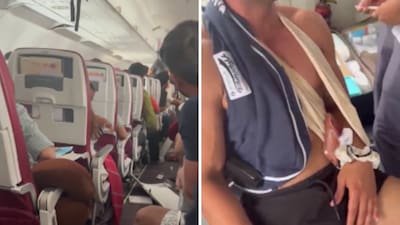
NEW DELHI — A recent in-flight incident involving an Air India flight from Phuket to Delhi has sparked intense scrutiny over aviation safety protocols, raising widespread questions among the flying public: Why are commercial airline pilots tested for alcohol before every flight, but not routinely screened for narcotics or psychoactive substances before stepping into the cockpit?
While alcohol consumption is monitored via mandatory pre-flight and post-flight breathalyzer examinations, the regulatory regime governing narcotics, prescription drugs, and psychoactive substances operates under a completely different framework governed by the Directorate General of Civil Aviation (DGCA).
The Regulatory Divide: Alcohol vs. Psychoactive Substances
Under DGCA Civil Aviation Requirements (CAR), alcohol testing is governed by strict, universal mandates. In accordance with Rule 24 of the Aircraft Rules, 1937, 100% of flight crew operating domestic departures in India must undergo mandatory pre-flight breathalyzer (BA) checks. For international inbound flights where pre-departure facilities may not be directly administered by Indian authorities, crews undergo post-flight testing upon touchdown. The rule enforces zero tolerance: any detectable trace of alcohol leads to immediate grounding.
In contrast, testing for psychoactive substances is governed by a separate CAR introduced in late 2021 and operationalized in 2022. Unlike a five-second breathalyzer test, screening for narcotics requires urine sample collection, chemical reagents, and rigorous laboratory analysis, making universal pre-flight testing logistically and operationally impractical for thousands of daily departures.
Instead, India’s aviation watchdog mandates testing across four distinct triggers:
Random Testing: Airlines and air navigation providers must randomly test at least 10% of their flight crew and Air Traffic Controllers (ATCOs) annually.
Pre-Employment Screening: Mandatory drug testing for all incoming flight crew and safety personnel during induction.
Post-Incident/Accident: Mandatory screening following any serious incident, accident, or unscheduled flight disturbance.
Follow-Up Monitoring: Regular surveillance of personnel returning from rehabilitation programs.
The Tested Substances and Testing Protocol
The DGCA regime mandates screening for six distinct classes of psychoactive substances:
Cannabis (measured as Tetrahydrocannabinol / THC)
Amphetamines and amphetamine-type stimulants
Opiates and their metabolites
Cocaine
Barbiturates
Benzodiazepines
To prevent procedural errors or false accusations, the DGCA prescribes a strict split-sample method. When a pilot is called for testing, a single urine specimen is divided into Container A and Container B under strict chain-of-custody protocols.
Sample A undergoes an on-site rapid screening test. If the result returns “non-negative”—a term used deliberately rather than “positive” to account for possible cross-reactivity from over-the-counter medications, dietary items like poppy seeds, or festival drinks—the crew member is immediately grounded from safety-sensitive duties. Sample B is then dispatched to a DGCA-accredited national laboratory for confirmatory testing using advanced methods such as Gas Chromatography-Mass Spectrometry (GC-MS) or Liquid Chromatography-Mass Spectrometry (LC-MS).
Strict Penalties and the ‘Three Strikes’ Rule
The DGCA’s policy balances passenger safety with medical rehabilitation, outlining a tiered enforcement framework for confirmed violations:
Violation StageRegulatory Action & Licence Status
First Offence Immediate grounding; mandatory referral to a de-addiction specialist/rehabilitation center. Return to duty is permitted only after completing treatment, clearing a fresh negative drug test, and obtaining a fitness certificate.
Second offence Three-year suspension of the commercial pilot licence (CPL/ATPL).
Third Offence Permanent cancellation of flying privileges.
Test Refusal Refusing a test triggers immediate removal from duty and a 48-hour window to clear screening. Failure results in a one-year licence suspension; repeated refusal leads to multi-year bans or licence revocation.
Global Alignment
Aviation experts note that India’s framework aligns closely with international civil aviation standards. The International Civil Aviation Organization (ICAO), the US Federal Aviation Administration (FAA), and the European Union Aviation Safety Agency (EASA) all rely on random sampling, pre-employment checks, and post-incident investigations rather than universal daily drug screenings.
While routine pre-flight breathalyzer tests will remain a staple of daily pilot check-ins, the DGCA’s psychoactive substance rules rely on the threat of surprise random testing, comprehensive post-incident screening, and severe career-ending penalties to ensure cockpit sobriety.